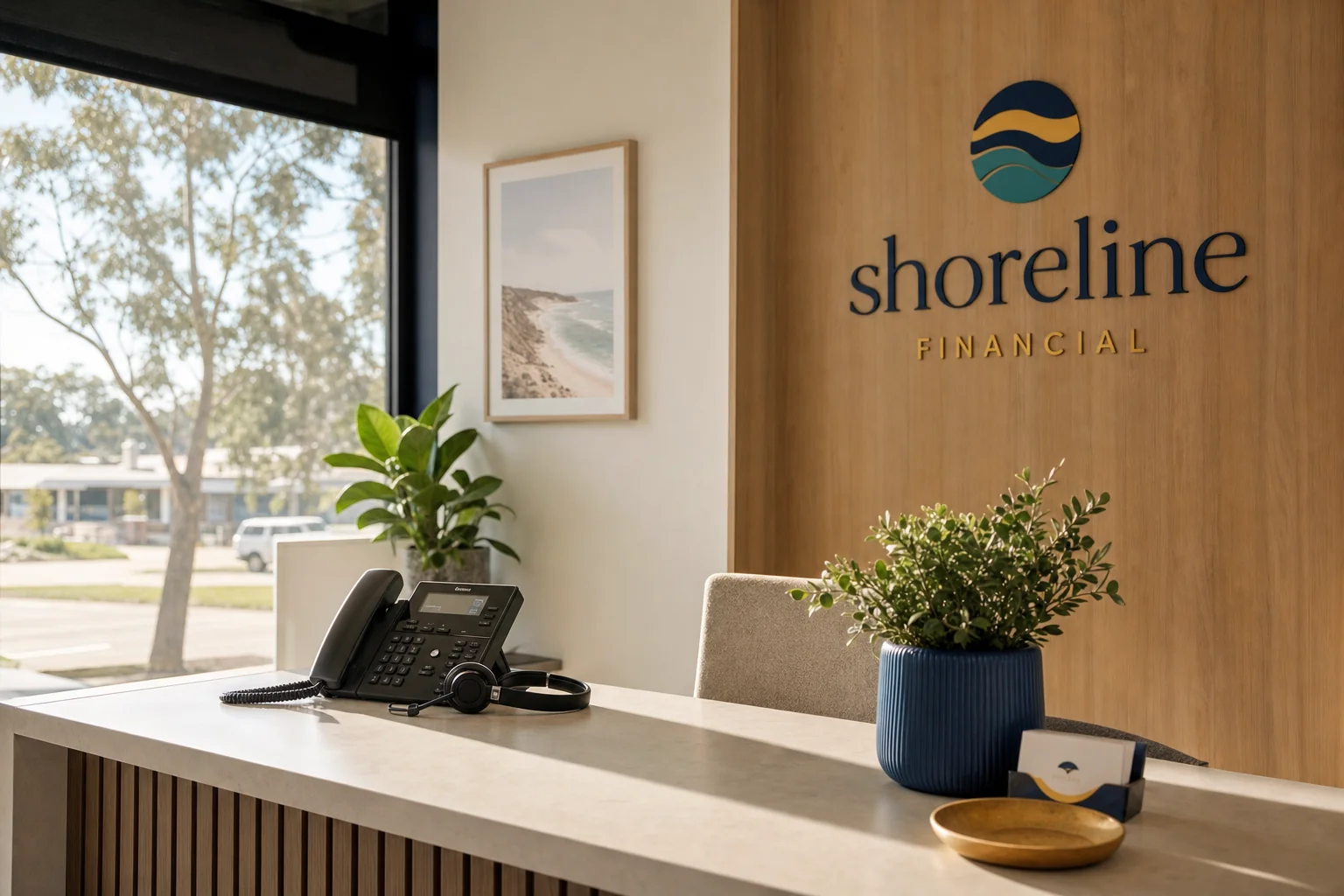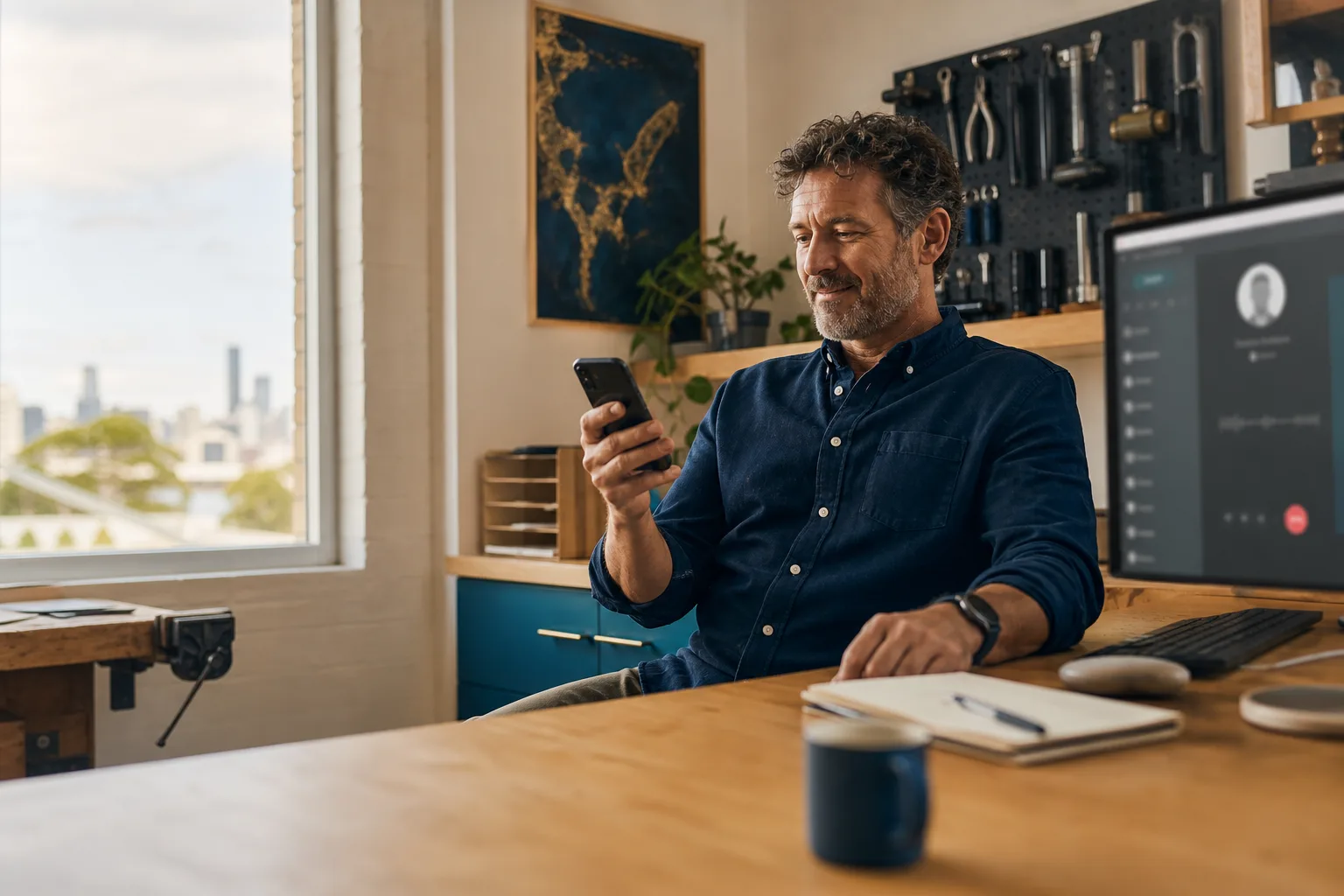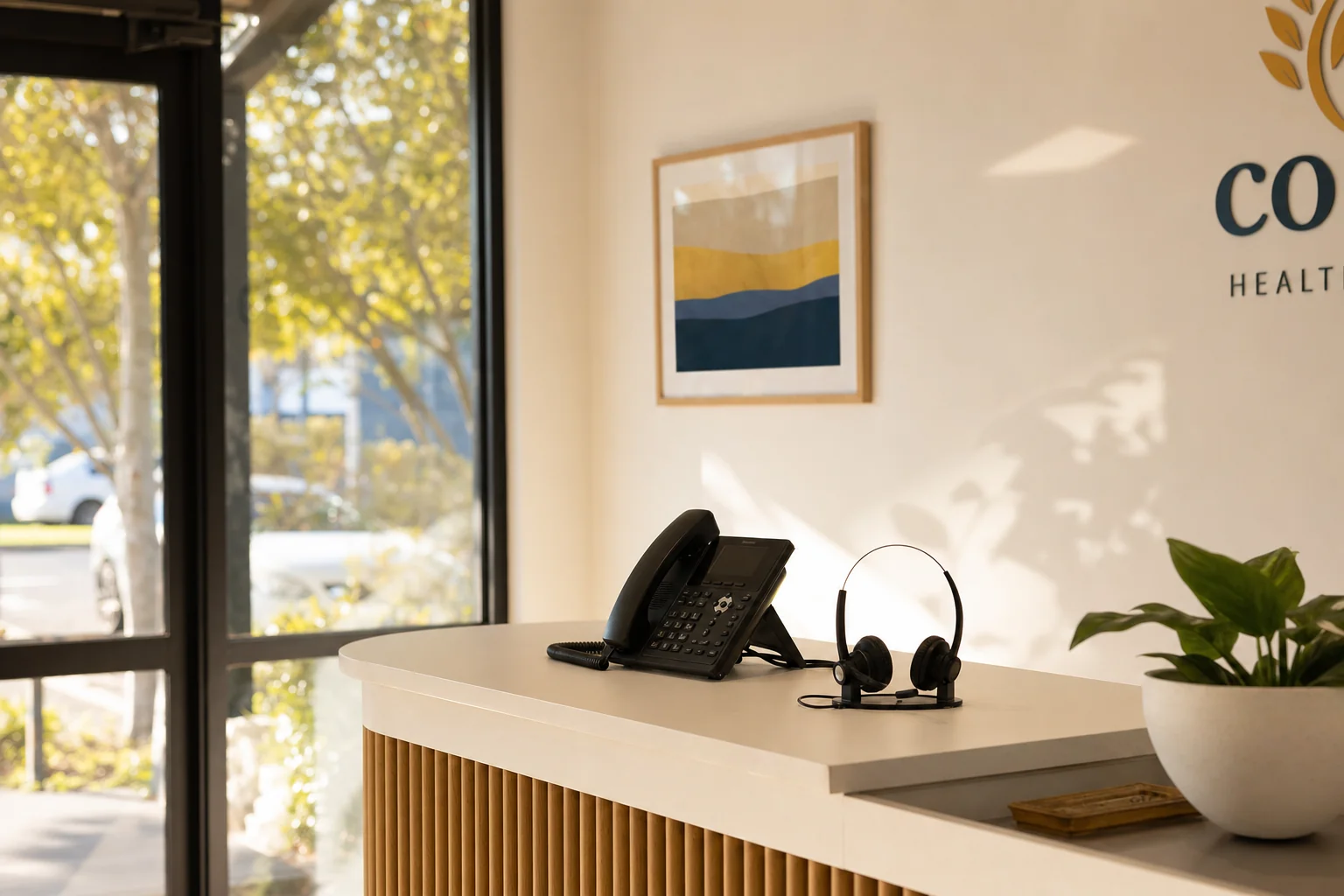
An AI receptionist is an automated phone answering system that uses artificial intelligence to answer, book appointments, and qualify leads around the clock. It greets callers by name or business context, takes detailed messages, and routes enquiries, all without a human picking up the phone. In Australia, AI receptionists are used by trades businesses, medical practices, law firms, real estate agencies, and service-based businesses that cannot afford to miss calls. If you already know you want one built, go straight to LUNA Systems' AI receptionist service for setup and integration.
For a small business, calls can go unanswered mid-job, at lunch or after hours, and a caller who can't get through can ring the next business in seconds. Unlike traditional IVR systems that force callers through rigid menu trees, modern AI receptionists hold natural conversations, understand Australian accents and slang, and integrate with your calendar, CRM, and booking software.
The technology has matured rapidly since 2024, and Australian small businesses now have access to AI-powered receptionist solutions that were previously only available to enterprise organisations. If you're ready to compare specific providers, we put the leading options side by side in our guide to the best virtual receptionist services in Australia, covering Brisbane and nationwide.
Key takeaways
- An AI receptionist is automated phone software that answers calls, books appointments, and qualifies leads around the clock, usually for a flat monthly fee that depends on the features you need.
- A full-time human receptionist costs $55,000 to $65,000 in base salary alone, rising to $65,000 to $80,000 a year once superannuation, leave, recruitment, and equipment are included.
- Calls can go unanswered mid-job, at lunch or after hours, and a caller who can't get through can ring the next business in seconds.
- LUNA Systems configures AI receptionists specifically for Australian service businesses, including local terminology, suburb names, and industry-specific language, and quotes pricing per business after a discovery call rather than a flat published rate.
- A virtual receptionist uses human operators and charges per minute or per call with limited hours, while an AI receptionist answers 24/7.
This guide is informational. If you'd rather skip the research and get it built, see LUNA Systems' done-for-you AI receptionist service: quoted per business, set up around your calendar and CRM. Running a clinic instead? Go straight to the AI medical receptionist designed around clinic-specific privacy, call boundaries and handover requirements.
What exactly does an AI receptionist do?
An AI receptionist handles the same tasks a human receptionist would, but it does them around the clock without sick days, annual leave, or lunch breaks.
When a customer calls your business, the AI answers within one or two rings. It greets the caller using your business name and a script you have approved. From there, it can:
- Answer frequently asked questions about your services, opening hours, location, and pricing
- Book appointments directly into your calendar or automated booking system
- Qualify leads by asking pre-set questions (budget, timeline, service needed) and scoring them
- Take detailed messages and send them to you via SMS, email, or your CRM
- Transfer urgent calls to your mobile or a specific team member
- Handle after-hours calls so you never lose a lead to voicemail
The key difference between an AI receptionist and a basic answering service is intelligence. An AI receptionist does not just take a name and number. It understands context, responds to follow-up questions, and can complete multi-step tasks like checking your availability and confirming a booking, all within the same call.
How does an AI receptionist work for Australian businesses?
The technology behind AI receptionists combines several components: speech recognition (converting voice to text), natural language processing (understanding what the caller means), and text-to-speech (responding in a natural-sounding voice).
Here is what the setup process typically looks like for an Australian small business:
- Configuration, You work with your provider to set up a call script, define your services, upload your FAQ answers, and connect your calendar or CRM. At LUNA Systems, we configure every AI receptionist specifically for Australian service businesses, including local terminology, suburb names, and industry-specific language.
- Phone number setup, Your existing business number is forwarded to the AI system when you cannot answer, or you can set it to answer all calls. Some businesses use a dedicated number for after-hours calls only.
- Integration, The AI connects to your booking software, CRM, or project management tool. When a caller books an appointment, it appears in your calendar automatically. When a lead is qualified, it enters your pipeline.
- Training and testing, The system is tested with sample calls to ensure it handles your most common enquiries correctly. You review transcripts and refine the responses.
- Live operation, Calls are answered, transcribed, and logged. You receive summaries and can review every conversation. The AI improves over time as it handles more of your specific call types.
Most Australian businesses are fully operational within one to two weeks of starting the setup process.
How much does an AI receptionist cost in Australia?
Cost is usually the first question business owners ask, and the answer depends on your call volume and the features you need.
According to the Australian Bureau of Statistics, there were 2,814,778 actively trading businesses in Australia at 30 June 2026. Here is how the options for handling their calls are typically priced:
| Solution | How it is priced | What You Get |
|---|---|---|
| Basic AI answering | Flat monthly fee, at the lower end | Call answering, message taking, basic FAQ |
| Mid-range AI receptionist | Flat monthly fee, in the middle | Answering + appointment booking + lead qualification |
| Full AI receptionist with integrations | Flat monthly fee, at the higher end | Everything above + CRM integration + after-hours + custom workflows |
| Human receptionist (full-time) | A salary of $55,000 to $65,000 a year, plus on-costs | One person, business hours only, annual leave, sick days |
| Virtual receptionist service | Per-minute or per-call billing | Human operators, limited hours, per-minute billing |
The maths depends on your call volume. A full-time receptionist costs roughly $65,000 to $80,000 a year once super and on-costs are added. A virtual receptionist service usually charges per minute or per call, so the cost climbs as your call volume grows. For an AI receptionist, compare each provider's billing terms, included usage and extra charges against your real call volume.
What a full-time receptionist actually costs once you add it all up
Most business owners think "salary" and stop there. The real cost of putting someone at a front desk in Australia goes well beyond the hourly rate:
- Base salary: around $55,000 to $65,000 (our estimate; the legal minimum is the award rate on the Fair Work Pay Calculator)
- Superannuation (12% since 1 July 2025): $6,600 to $7,800
- Annual leave (4 weeks) and sick/personal leave (10 days): already built into the salary, but that's over 5 weeks a year where nobody's answering your phone
- Workers compensation insurance: $500 to $1,500 depending on state and industry
- Recruitment costs: $3,000 to $8,000 through an agency, or dozens of hours of your own time
- Training and onboarding: at least 2 to 4 weeks before they're properly across your systems
- Equipment and workspace: desk, computer, phone system, headset. $2,000 to $5,000 upfront
All up, that's $65,000 to $80,000 a year for one person working 38 hours a week who takes holidays and gets sick. And when they leave, you do it all again. An AI receptionist gives you 24/7 coverage a full-time hire can't match without overtime.
Which industries benefit most from AI receptionists?
AI receptionists work for any business that receives inbound phone calls, but some industries see an outsized return:
Trades and home services, Plumbers, electricians, and HVAC technicians are often on the tools when calls come in. An AI receptionist captures job details, books quote appointments, and sends the information straight to their phone. Missed calls are the single biggest source of lost revenue for trades businesses across Australia.
Medical and dental practices, Patients call to book, reschedule and ask about availability. A clinic-specific receptionist can handle approved administrative booking calls while the front desk supports people in the clinic. Medical practices should use the separate AI medical receptionist pathway to assess privacy, call boundaries, after-hours handling and human escalation.
Legal firms often lose potential clients to whichever firm answers first. An AI receptionist ensures every call is answered immediately, captures the nature of the enquiry, and qualifies the lead before passing it to a solicitor.
Real estate agencies, Buyer and tenant enquiries come in at all hours. An AI receptionist for real estate agencies can answer property questions, book inspections, and capture contact details for follow-up. The phone is one piece of it, and we've covered the rest in how real estate agents use automation to close more deals.
Allied health, Physiotherapists, chiropractors, psychologists, and other allied health practitioners benefit from automated appointment booking and recall reminders, especially solo practitioners who cannot answer the phone during consultations.
Accounting and financial services, Tax season creates call surges that overwhelm small firms. An AI receptionist handles the overflow without hiring temporary staff.
After-hours answering: the option most businesses get wrong
A large share of missed calls happen outside business hours. Most callers who reach voicemail simply hang up and call the next business on Google rather than leaving a message. That means every evening and weekend call your business doesn't answer is a lead handed straight to a competitor.
There are three real options for after-hours cover, and they're worlds apart on cost and quality:
Voicemail (free). Technically an after-hours answering option, but the worst one. Most callers won't leave a message, there's no way to capture urgent enquiries, and it feels unprofessional for a service business in 2026.
Human call centre. A real operator answers using your business name and either takes a message or transfers the call. Good for businesses that need empathy on the line, but expensive at volume, quality varies between providers, and operators working for dozens of clients can't book appointments or access your calendar.
AI after-hours answering. An AI receptionist answers instantly, holds a real conversation, books appointments, captures lead details, and triages urgent calls. LUNA Systems' after-hours AI cover is quoted per business after a discovery call.
The pattern by industry is consistent: trades businesses need after-hours answering that tells a genuine emergency (water pouring through a ceiling) apart from a routine quote request that can wait until morning. Medical and allied health practices need approved call-routing rules that direct emergency language to the correct pathway while still handling routine administrative bookings. Property managers need maintenance requests logged with full detail so a locked-out tenant on a Friday night doesn't turn into fourteen voicemails by Monday.
If you only need coverage outside business hours and handle calls yourself during the day, after-hours-only AI answering is the lowest-risk way to try the technology, since you're only capturing calls you'd otherwise miss entirely.
What should you look for in an AI receptionist provider?
Not all AI receptionist services are equal. Here is what to evaluate before signing up:
Australian voice and language support, The AI should sound natural to Australian callers. It needs to understand local accents, pronounce suburb names correctly, and use Australian terminology (mobile not cell phone, enquiry not inquiry in some contexts).
Integration with your existing tools, If you use a specific booking system, CRM, or practice management software, confirm that the AI can connect to it. An AI receptionist that takes messages but cannot book appointments is only doing half the job.
Call transcripts and recordings, You should have access to full transcripts and recordings of every call. This is essential for quality assurance and for understanding what your callers are actually asking.
Custom call scripts, You need control over what the AI says, how it greets callers, what questions it asks, and when it transfers to a human. A one-size-fits-all script will not represent your brand properly.
After-hours capability, If you only need AI answering outside business hours, confirm the provider supports time-based routing. Many Australian businesses use AI for after-hours answering while their staff handles calls during the day.
Transparent pricing, Avoid providers that charge per minute or per call on top of a monthly fee. Flat-rate pricing is the most predictable and cost-effective model for growing businesses.
Local support, If something goes wrong, you want to speak to someone in Australia who understands your business context. Offshore support teams often lack the context needed to troubleshoot call scripts for Australian industries.
LUNA Systems configures AI receptionists specifically for Australian service businesses. We handle the setup, scripting, integration, and ongoing optimisation, so you get a system that works from day one without needing to become a tech expert.
How to choose the best AI receptionist in Australia
There is no single best AI receptionist in Australia for every business, but there is a reliable way to work out which one is the best AI receptionist for small business in your situation. Compare providers on a small set of factors rather than the sales pitch.
Start with answer quality: ask to hear real call recordings, not a scripted demo. A good AI receptionist holds a natural back and forth conversation, handles interruptions, and does not fall apart when a caller asks something slightly off script.
Check that it actually understands Australian callers. That means a natural Australian accent in the voice itself, and comprehension of local terms, suburb names, and the way Australians actually speak, not a US-built system with an accent bolted on top.
Confirm the integration goes both ways. The AI should read your real calendar availability before booking, and write straight into your CRM or practice management system afterwards. A receptionist that only takes messages is doing half the job.
Ask specifically how after-hours calls are handled, since this is where most of the value sits for a lot of businesses. Some providers only run business hours and treat after-hours as an add-on, so confirm coverage explicitly rather than assuming it is included.
Look at escalation rules. The best AI receptionist for small business is not one that tries to handle everything itself. It should recognise a genuinely complex or sensitive call and hand it to a real person, with the context already captured.
Finally, check the commercial terms. Month-to-month agreements with a short notice period let you leave if the service does not perform, which tells you a lot about how confident a provider is in their own product. Long contracts locked in up front are a reason to ask more questions, not fewer.
What are the most common concerns about AI receptionists?
Will callers know they are talking to AI?, Modern AI receptionists sound remarkably natural. Most callers do not realise they are speaking to an AI, especially for routine tasks like booking an appointment or leaving a message. For businesses that prefer transparency, you can include a brief disclosure in the greeting.
What happens if the AI cannot handle a call?, Good AI receptionists have escalation rules. If a caller asks something outside the AI's knowledge, or if they specifically request a human, the call is transferred to your mobile or a designated team member. The AI is a first line of response, not a replacement for human judgement on complex matters.
Is it reliable?, Cloud-based AI receptionists are designed to be available around the clock. They do not call in sick, and they do not have bad days. If your internet goes down, the AI still operates because it runs on the provider's infrastructure, not yours.
What about privacy and compliance?, Reputable providers store call data securely and comply with the Australian Privacy Act 1988. Check that your provider does not use your call data to train their AI models without your consent, and confirm where the data is stored.
How to get started with an AI receptionist
Getting an AI receptionist set up for your business is simpler than most owners expect:
- Audit your current call handling, How many calls do you miss per week? What are the most common questions callers ask? What happens to after-hours calls? This gives you a baseline to measure improvement against.
- Define your requirements, Do you need appointment booking, lead qualification, or just message taking? Do you need after-hours only or all-day coverage?
- Choose a provider, Look for the criteria listed above. Prioritise Australian support, integration capability, and transparent pricing.
- Configure and test, Work with your provider to set up your call script, connect your tools, and test with sample calls.
- Go live and monitor, Review call transcripts for the first two weeks. Refine the AI's responses based on real caller interactions.
Most businesses see measurable results within the first month, fewer missed calls, more booked appointments, and leads that no longer slip through the cracks.
Frequently asked questions
How many calls can an AI receptionist handle at once?
Unlike a human receptionist who can only handle one call at a time, an AI receptionist can answer multiple simultaneous calls. There is no hold music, no engaged signal, and no waiting. Every caller gets an immediate response, even during your busiest periods.
Can an AI receptionist handle Australian accents?
Yes. Modern AI receptionists are trained on diverse Australian speech patterns, including regional accents. They handle Australian English, common slang, and suburb names accurately. During setup, your provider should test with callers who represent your typical customer base.
Will an AI receptionist replace my staff?
For most small businesses, an AI receptionist supplements existing staff rather than replacing them. It handles routine calls, booking requests, FAQ enquiries, after-hours messages, so your team can focus on higher-value work like serving clients in person. Some solo operators use an AI receptionist as their entire front desk solution.
Can I try an AI receptionist before committing?
Most providers offer a trial period or a money-back guarantee. At LUNA Systems, we recommend starting with after-hours answering first. This is the lowest-risk way to see the technology in action, since you are only capturing calls you would otherwise miss entirely.
Will it work with my existing phone number?
Yes. AI receptionist services typically work by forwarding your existing business number to the AI agent, so you keep your number and callers experience no change on their end. Setup usually involves a simple call-forwarding adjustment with your phone provider.
What is the difference between an AI receptionist and a virtual receptionist?
A virtual receptionist is a human operator working remotely who answers calls on your behalf. They charge per minute or per call, and availability is limited to their rostered hours. An AI receptionist is software that answers calls 24/7 for a flat monthly fee. Virtual receptionists are better for highly complex or sensitive calls. AI receptionists are better for volume, consistency, and cost efficiency.
---
An AI receptionist is one of the simplest and most cost-effective upgrades an Australian small business can make. If missed calls, after-hours enquiries, or receptionist costs are costing you revenue, it is worth exploring.
Ready to see how an AI receptionist would work for your business? Get in touch with LUNA Systems and we will walk you through a setup tailored to your industry and call volume.
More frequently asked questions
What affects AI receptionist pricing?
AI receptionist cost in Australia depends on your call volume, the features you need, and how deeply it integrates with your booking system and CRM, so there is no single sticker price. Compare each provider's billing terms, included calls or minutes, extra charges and coverage hours. A basic setup that answers calls and takes messages sits at the lower end; add appointment booking, lead qualification, and after-hours routing and the price reflects it. LUNA Systems quotes per business after a short discovery call so you only pay for what your business actually needs.

Founder, LUNA Systems · Registered Nurse (AHPRA: NMW0002113429)
Former nurse and beauty therapist turned automation consultant. Justine builds custom AI systems for Australian service businesses, so they can stop chasing leads and start growing.
Want automation tips in your inbox?
Get weekly insights on business automation. No spam, unsubscribe anytime.