Missing emergency calls while on a job
An urgent caller needs a clear next step. Voicemail without a useful response path gives them a reason to keep moving through the local results.
Plumber marketing · websites · automation
A plumber marketing system for both kinds of work: the urgent call that needs an answer now and the planned project that needs proof, a useful quote path and follow-up.
A strong plumber marketing system has to win two different kinds of work. Urgent customers want a relevant local result, immediate proof and a fast answer. Planned-project customers compare services, photos, reviews, process and timing before they request a quote. LUNA Systems joins those journeys into one practical setup for Australian plumbing businesses: a mobile-first website, local SEO and Google Business Profile work, paid search where it is useful, call answering with approved escalation rules, quote follow-up and review requests. The system is built around the plumber's actual service area, capacity, job types and current tools. It records qualified enquiries, response outcomes, booked work and quote status so marketing can be assessed beyond clicks. Websites commonly move from kickoff to launch in two to four weeks. Search growth compounds over a longer period, and automation timing depends on the call flow, calendar, CRM and approvals involved. Every engagement is scoped and quoted for the individual business.
By Justine Coupland
Updated 23 July 2026
The leaks
Marketing is not finished when the phone rings. The system has to make you findable, credible and reachable, then keep planned work moving after the first contact.
An urgent caller needs a clear next step. Voicemail without a useful response path gives them a reason to keep moving through the local results.
Planned work can sit in an inbox after the quote is sent. Without ownership and a follow-up outcome, the team cannot tell whether it was won, lost or simply forgotten.
Broad traffic is not the same as serviceable demand. The page, Business Profile and campaigns need to match the services and suburbs your crew can actually cover.
A thin profile, generic website and stale job photos make the customer do more work to trust you, especially when several plumbers appear in the same local result.
The two-speed system
One plumber can receive both enquiries on the same day. The message, landing page, response time and follow-up should match the customer’s actual decision.
Urgent job
Specific service + suburb intent
Fast mobile proof and tap-to-call
Urgency and location captured
Approved escalation or booking
Planned project
Service detail, photos and useful FAQs
Scope, location and preferred timing
Clear next step and ownership
Helpful reminders until an outcome
Direct answer
Build visibility and response as one system. These five steps cover the full journey from local search to booked work.
Create clear service and location coverage for work such as blocked drains, burst pipes and hot-water faults, then make the call action effortless on mobile.
Keep your Google Business Profile accurate, specific and current. Google says local results are mainly shaped by relevance, distance and prominence.
Use real job photos, useful reviews, service-area clarity, licence information and an honest explanation of what happens next.
Use Google Ads for services and locations you can fulfil, with call tracking and landing pages that match the search rather than sending every click to one generic page.
Answer quickly, capture the job details, follow up planned quotes and ask for reviews after completed work. Promotion is wasted when the response system leaks.
Google’s own guidance says local results are mainly based on relevance, distance and prominence. Complete business information, website signals and genuine reviews all help Google understand and assess a local business.
Read Google’s guidanceThe operating stack
The right mix depends on your service area, capacity, existing assets and the work you want more of.
Put the tap-to-call action, services, service areas, licence details, proof and emergency availability where a mobile visitor can use them immediately.
Typical website build: 2–4 weeks
Measure: Calls and qualified enquiries
Build relevant service and location coverage, accurate business information, useful photos and a steady review process around the searches your crew can actually service.
SEO compounds over months
Measure: Local visibility and organic leads
Use tightly scoped campaigns, dedicated landing pages and call tracking so urgent and high-value searches do not disappear into a generic homepage.
Launch after tracking and landing pages are ready
Measure: Qualified cost per enquiry
Capture the job type, suburb, urgency and contact details, then route genuine emergencies and handoffs according to rules you approve.
Setup follows your call flow and tools
Measure: Answered calls and booked work
Keep planned projects moving after the first conversation, and ask for feedback once a completed job reaches the right point in your workflow.
Mapped to your existing job process
Measure: Quote outcomes and review requests
Built around the work
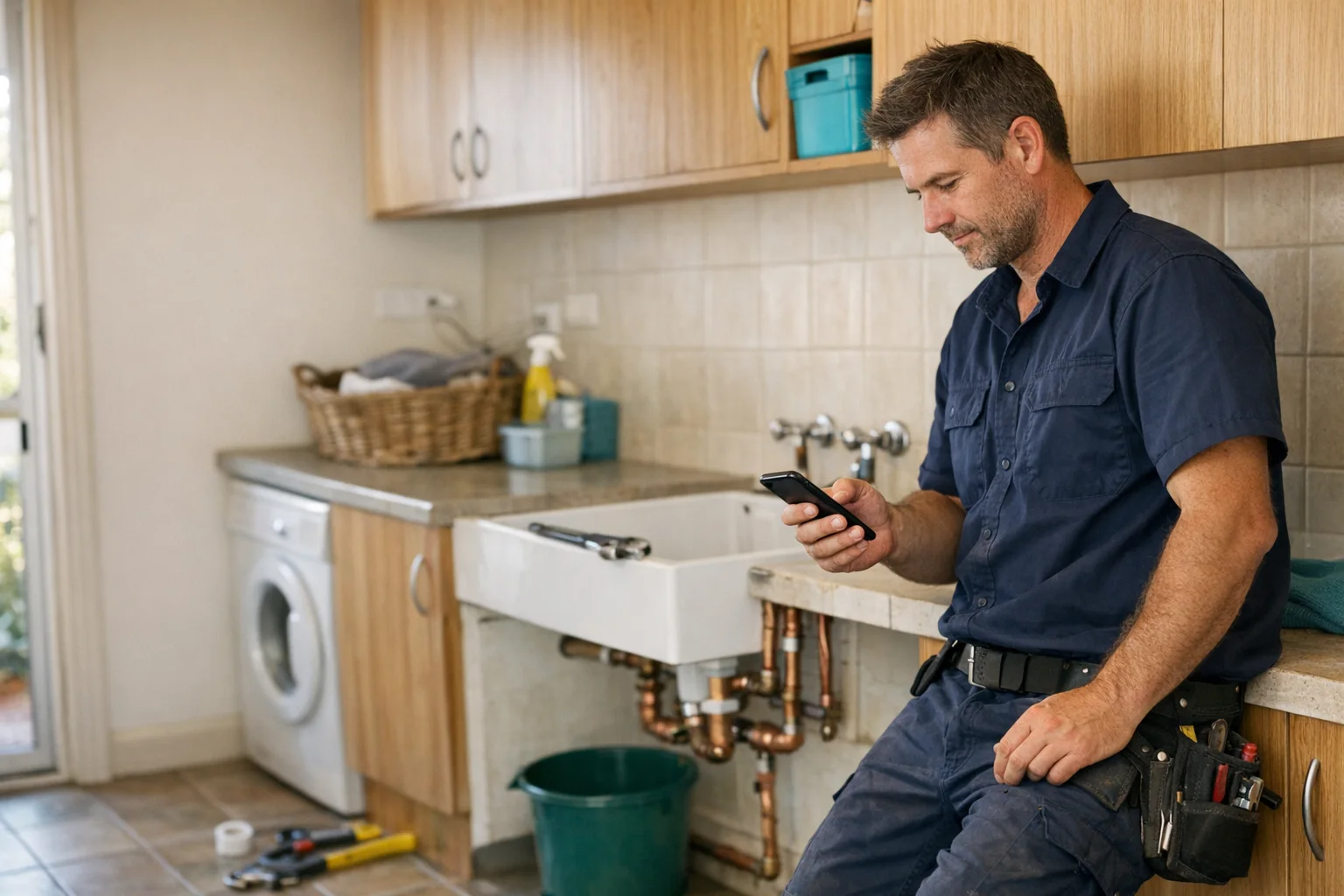
A sole trader under a sink needs a different response path from a dispatcher running several vans. We map who answers, which jobs are urgent, what information the team needs, which suburbs are practical and what happens when the system is unsure.
Illustrative scenario
This is a fictional workflow example, not a client case study or performance claim. The point is the handoff between marketing and operations.
A homeowner finds the blocked-drain page, sees the service area and taps to call.
The call flow captures the suburb, problem and urgency, then follows the plumber’s approved routing rule.
A bathroom enquiry arrives through a different page with photos, timing and address already attached.
The team reviews the quote brief. The follow-up sequence starts only after the quote is sent and approved.
The dashboard shows which enquiries became jobs, which quotes remain open and which completed work is ready for a review request.
Measurement
Impressions and clicks are useful diagnostics. The business decision sits further down the line.
Service, suburb, urgency and contact details are usable.
Answered, returned, routed or booked, with a clear owner.
The enquiry became work your team accepted and can fulfil.
Won, lost, deferred or still open, rather than simply “sent”.
Triggered only when the completed-job workflow reaches the approved point.
Buyer’s checklist
Use these filters before signing a long contract or handing over account access.
Can they separate emergency calls from planned-project research instead of treating every lead the same?
Will they report qualified enquiries, booked jobs and quote outcomes rather than stopping at clicks and impressions?
Do you retain your domain, website, ad accounts, analytics, content and customer data?
Can their marketing connect to the phone, calendar, CRM and quote process your team already uses?
Will they say what is included, what depends on third-party approval and what your team still owns?
Choose the right route
Common questions
Practical answers about marketing budget, timing, fit, call handling and account ownership.
Yes. A plumber website is the most common place to start. We build fast, mobile-first sites with a tap-to-call number and trust signals up top, designed so an emergency caller chooses you in seconds. Most plumber websites are live within two to four weeks of kickoff.
Yes. SEO for plumbers means ranking for high-intent searches like 'emergency plumber near me', 'blocked drain', and 'hot water repair' plus your suburb. We optimise your website and your Google Business Profile so you turn up in the local map pack at the moment a customer needs a plumber. SEO builds over two to four months, so it pairs well with faster channels like Google Ads.
Start with five connected jobs: build a fast mobile website with clear services and service areas; keep your Google Business Profile complete and accurate; create useful local SEO coverage; use paid search selectively for work you can fulfil; and connect every enquiry to a clear call, booking, quote-follow-up and review process. Promotion is most useful when the response system is ready for the demand it creates.
There is no responsible one-size figure. A sole trader with limited weekly capacity should not use the same budget as a multi-van business entering new suburbs. Work backwards from the jobs you want, the areas you can service, your close rate and delivery capacity. Fund one measurable acquisition path and the conversion assets it needs, then scale only after you can see qualified enquiry and booked-job outcomes. LUNA provides a custom quote after discovery and does not publish fixed packages.
They solve different timing problems. Google Ads can create visibility once the campaign, landing page and tracking are ready, while SEO and local visibility compound over a longer period. Many plumbing businesses use paid search selectively for immediate demand while building the website, Business Profile, service pages and review process that support durable local discovery.
It depends on the number of services and service areas, the existing brand and content, and whether booking, call handling, reviews, CRM or advertising need to connect to the build. A standalone website is scoped differently from a complete growth system. LUNA quotes the exact figure after a discovery call. There is no public price list and no lock-in contract.
It can ask approved intake questions, capture the job type, suburb, urgency and contact details, then follow the routing rules agreed with the plumbing business. Genuine emergencies, uncertainty and exceptions need a clear human escalation path. The exact behaviour depends on your number setup, staff availability, calendar and approved call flow.
The system can be deliberately small. A sole trader may start with a conversion-ready website and one response workflow, then add SEO, ads or follow-up when capacity supports it. The aim is to remove a specific leak without creating a larger software stack than the business can use.
A configured workflow can collect the contact details, location, service type, timing and photos your team has approved for initial intake. It can create a useful summary and start an approved follow-up only after the quote reaches the right stage. The plumber still decides the scope, price and whether the work is accepted.
Travel buffers, service areas and booking windows can be configured around the calendar or job process being connected. The right setup depends on how the plumbing business allocates vans, handles emergencies and confirms onsite work, so it is mapped before customers are offered times.
Yes. The current Jobs and Skills Australia plumber profile reports 107,600 people employed and annual employment growth of 4,500. Demand for the occupation does not guarantee demand for an individual business, so local visibility, service mix, availability and reputation still matter.
The timing depends on the channel and the starting point. A website commonly moves from kickoff to launch in two to four weeks. Paid search can start after research, landing pages, tracking and account access are ready. SEO and local visibility usually need sustained work over months. Call handling and automation depend on the workflow, tools, approvals and testing involved.
The intended setup is that the plumbing business retains ownership of its domain, website, advertising and analytics accounts, content and customer data. Any third-party platform terms still apply. LUNA documents the agreed access, handover and ongoing support scope before work begins.
Useful next reads
Start with the leak that matters
We will map your service area, enquiry types, response path and current tools, then recommend the smallest useful scope. Every proposal is custom and there is no public package list.
Get in touch
Tell us a bit about what you're after and we'll get back to you within one business day with honest advice on where to start.