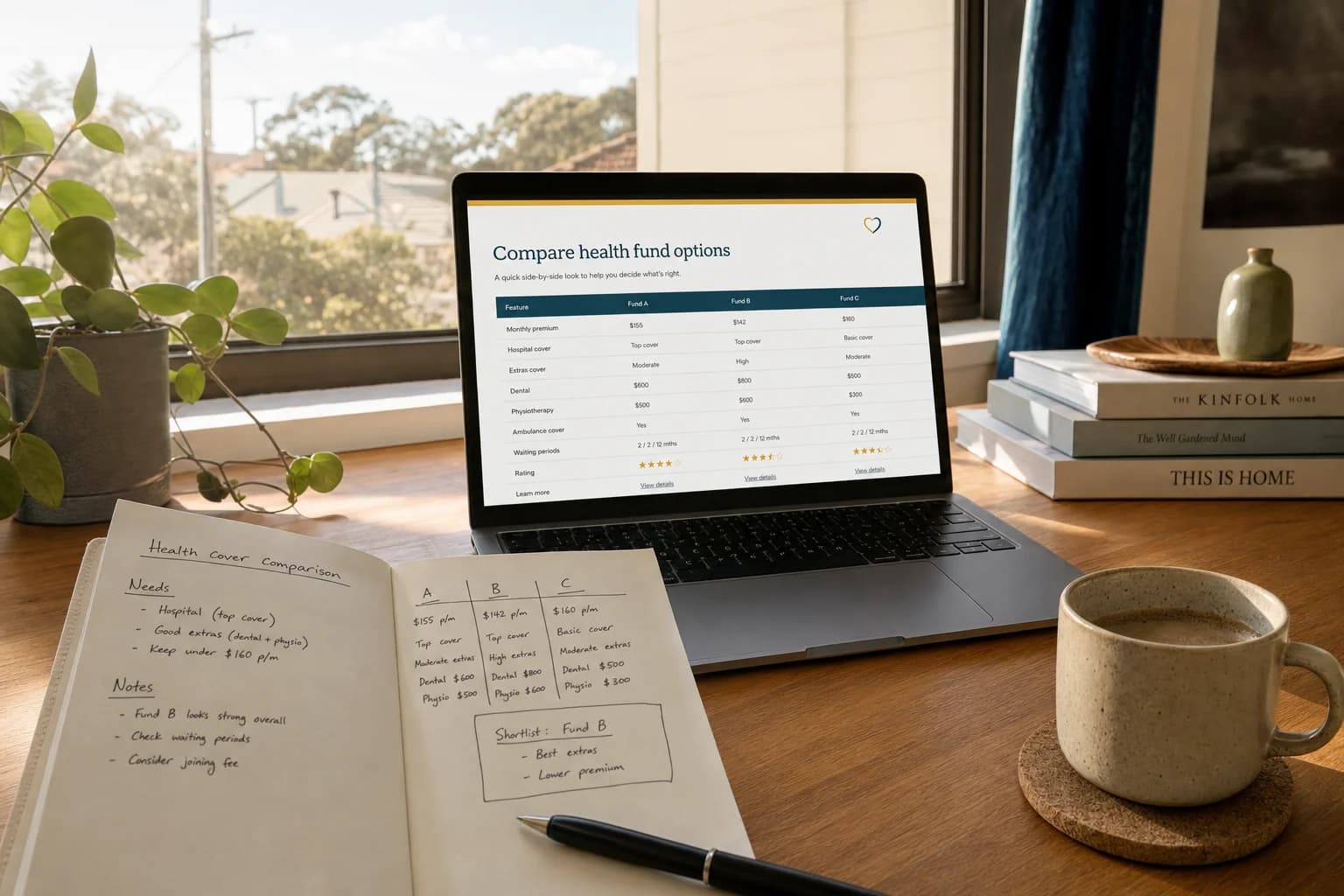
The fastest way to buy the wrong scheduling software is to compare Calendly, Cliniko and ServiceM8 as though they do the same job. They don't. Calendly is for straightforward appointments. Cliniko is practice-management software for clinics. ServiceM8 handles field jobs, quotes and dispatch. Start with the work the system needs to manage, then compare tools.
That's the state of appointment scheduling software in Australia in 2026: dozens of tools all calling themselves scheduling software, booking software, or calendar apps. Most are decent. Almost none are honest about what they're not built for. This guide is the version we wish existed when we started helping Australian businesses pick the right one.
Why generic scheduling tools fail Australian service businesses
Most of the well-known scheduling platforms were built in the US, for US buyers, with US assumptions baked into the defaults. That shows up in five places:
- SMS reminders need Australian-routed numbers to land reliably on Telstra, Optus, and Vodafone. International short codes get filtered or arrive with the wrong sender ID. Not every tool supports an Australian sender number without a paid add-on.
- Phone number formatting defaults to US. Customers type 0411 and the system rejects it or stores it as 411, breaking call-back automation and SMS integration with Australian phone systems.
- No GST handling on invoices. Australian businesses need to issue tax invoices with ABN and GST line items. Most international tools either ignore tax entirely or offer a "sales tax" field that doesn't behave like GST.
- Time zones and public holidays. Software that doesn't know about Queen's Birthday, Melbourne Cup Day, or the difference between AEST and AEDT will quietly schedule appointments on closed days.
- Customer data residency. Under the Privacy Act and Australian Privacy Principles, businesses handling sensitive information (especially health) should know where that data sits. Many international tools host customer records in the US or EU by default.
None of this is a deal-breaker for a sole consultant taking discovery calls. All of it is a problem for a multi-staff clinic, a trade business, or anyone taking payments.
The five categories of Australian buyer
Before comparing tools, identify which buyer you actually are. The right software for one category is the wrong software for another.
1. Solo professional
A consultant, coach, designer, accountant, or sole-trader practitioner. One calendar, one diary, mostly booking calls or short sessions. Doesn't need staff scheduling, doesn't need Medicare, doesn't need job dispatching. Wants a clean booking page they can put on their website and send in emails. Calendly-class territory.
2. Multi-staff clinic
Allied health, physio, psychology, chiropractic, dental, GP, mental health, podiatry. Multiple practitioners, rotating schedules, intake forms, Medicare claiming, private health rebates, AHPRA-aware copy, two-way SMS reminders. This is Cliniko, Halaxy, and Zanda (formerly Power Diary) territory, Australian-built practice management platforms.
*This is the buyer-type overview. If you're specifically a clinic weighing up Cliniko vs Halaxy vs Zanda vs LUNA Systems on Medicare integration, AHPRA-aware design, and phone-answering coverage, our appointment booking software for Australian clinics guide goes deeper on that comparison alone.*
3. Trade business
Plumber, electrician, builder, sparky, gardener, painter, locksmith. Schedule isn't really about bookings, it's about job dispatching, quotes, invoices, on-site forms, photo documentation, and a field team out in vans. ServiceM8 is the dominant Australian tool here. Tradify, AroFlo, and SimPRO also play in this space.
4. Multi-location service business
A franchise, a multi-clinic group, a regional service business with offices in three suburbs. Bookings, staff rosters, customer records, marketing automation, reviews, payments, reporting, all need to talk to each other across locations. A basic scheduling tool doesn't cut it. This is full-CRM territory, where scheduling is one feature inside a broader platform.
5. Healthcare specialist
Specialist medical, surgical, or allied health practice that needs more than basic booking. Medicare online claiming, HICAPS, eclipse for specialist billing, secure clinical notes, integration with hospitals or PMS systems, AHPRA-compliant patient communication. The Australian incumbents (Cliniko, Halaxy, Zanda) handle this. International generic tools cannot.
Five tools compared honestly
One tool from each category. Prices are from each provider's website in Australian dollars, checked 01-10-2026. ServiceM8's prices and Halaxy's credit prices include GST. Calendly and Cliniko list their prices in US dollars only, so none is shown for them. No hyperlinks to competitors because this is a comparison, not an affiliate post.
Calendly, solo professional
The dominant solo booking tool worldwide. Clean booking page, calendar sync, payment via Stripe, SMS reminders as a paid add-on. Strong integration ecosystem with Zoom, Google Meet, and HubSpot.
- Monthly price: Free tier available. Paid plans are priced per user in US dollars on the vendor's website, so no Australian dollar figure is shown here.
- What it does well: Clean UX, reliable calendar sync, fast to set up.
- What it doesn't do: GST-compliant invoicing, Medicare, AHPRA-aware templates, native AU SMS routing, GP rostering, multi-staff complex scheduling. SMS reminders need credits and an AU-routed number you set up separately.
- Right for: Solo consultants and coaches taking call bookings.
- Wrong for: Clinics, tradies, any business that takes payment for the appointment itself.
Cliniko, multi-staff clinic
Australian-built practice management. The default for allied health in this country. Medicare integrated, AHPRA-aware, multi-practitioner scheduling, clinical notes, intake forms, two-way SMS.
- Monthly price: Priced in US dollars on the vendor's website, so no Australian dollar figure is shown here. Plans are set by practitioner count, from a solo plan up to a band covering 26 to 200 practitioners.
- What it does well: Australian-built, Medicare-integrated, AHPRA-aware, designed for the workflow of an actual AU clinic.
- What it doesn't do: Marketing automation, lead capture from non-bookers, automated review collection, missed-call text-back recovery, sales pipelines. It's clinical, not commercial.
- Right for: Allied health, physio, psychology, podiatry, chiropractic, dental clinics with 1-20 practitioners.
- Wrong for: Trade businesses, retail, anything outside health.
ServiceM8, trade business
Australian-built field service platform. Job cards, quotes, invoices, on-site photos, GPS tracking, scheduling, recurring jobs. Used by tens of thousands of AU tradies.
- Monthly price: A free plan, then Starter at AUD $29, Growing at AUD $79, Premium at AUD $149 and Premium Plus at AUD $349 a month, including GST. Plans are set by jobs per month, and SMS beyond a plan's allowance costs 10 cents each.
- What it does well: Field dispatch, job documentation, quoting and invoicing, mobile-first design for blokes in vans.
- What it doesn't do: It's not a customer-facing booking tool the way Calendly is. Customers don't self-serve onto your calendar. It's an operator tool, not a public booking page.
- Right for: Plumbers, electricians, builders, mobile mechanics, locksmiths.
- Wrong for: Clinic booking, salon booking, anything customer-self-service.
For more on the trade-CRM landscape, see our guide to the best CRM for Australian tradies.
LUNA CRM, multi-location service / full CRM
A full CRM platform with scheduling, pipelines, SMS, email, AI phone answering, missed-call automation, review collection, and reporting in one system, configured for Australian businesses by LUNA Systems. For clinics and single-location services that want standalone online booking software without the full CRM, we also offer booking automation as a standalone service.
- Monthly price: Quoted per business after a short discovery call, because locations, users, and SMS volume change the build. No public price list.
- What it does well: One system for bookings, customer records, marketing automation, reviews, SMS, and phone cover. Customer data sits in one place. Australian-configured for SMS, phone, GST invoicing, and timezone handling.
- What it doesn't do: Medicare claiming or specialist clinical notes, we pair LUNA CRM with Cliniko or Halaxy for clinics that need both.
- Right for: Multi-location service businesses, franchises, agencies, beauty and aesthetics groups, anyone running marketing alongside scheduling.
- Wrong for: Solo consultants who only need a simple booking link. Overkill for that use case.
If you're not sure whether a full CRM is overkill or the right move, our small business CRM setup guide walks through the decision.
Halaxy, healthcare specialist
Australian-built, Medicare-integrated practice management. Strong for GPs, allied health, mental health, and specialist medical. Heavy on the billing workflow.
- Monthly price: The core platform is free for any number of practitioners. Add-ons run on pay-as-you-go credits at AUD $0.15 to $0.22 each (including GST), used for SMS, funding body rebates, e-scripts, telehealth and AI Scribe. Optional subscription features start from 25 credits a month, and payment processing fees start from 1.5% per transaction.
- What it does well: Medicare claiming, private health rebates, clinical notes, telehealth, secure messaging to GPs and specialists.
- What it doesn't do: Modern marketing automation, lead capture, review velocity work. Same gap as Cliniko on the commercial side.
- Right for: GPs, specialists, mental health practitioners, allied health where billing complexity is high.
- Wrong for: Anyone outside healthcare.
For more on automating clinic appointments specifically, see our clinic appointment automation guide.
The integration trap
The most expensive way to buy scheduling software is often to buy the cheapest one. Here's how it usually plays out for a service business with 3-5 staff:
- Buy Calendly Standard, billed per user. Three users means three seats.
- Realise it doesn't take deposits. Bolt on Stripe, which takes a fee on every card payment.
- Realise SMS reminders are extra credits. Add an AU-routed SMS service, billed on top of the plan.
- Realise customer records aren't going anywhere useful. Add Mailchimp for email nurture.
- Realise you can't see who hasn't booked yet. Add a basic CRM, usually billed per user.
- Realise you're losing reviews. Add a review automation tool, billed monthly.
- Set up Zapier to glue all of it together, billed by task volume.
Total: six tools, none of which share a single customer record cleanly. Every refund means updating three systems. Every customer who replies to an SMS lands in a queue nobody checks. Every new staff member needs five logins.
Add up the monthly bills for every tool you'd end up needing, then compare that total with one platform that handles bookings, payments, SMS, CRM, and reviews in one place. The single platform is simpler and more reliable, and the honest math rarely favours the cheapest tool when you're running a real operation. We covered this trap in more depth in our guide to appointment booking and CRM platforms.
Australian compliance check
Three regulators matter when picking scheduling software.
Fair Work (fairwork.gov.au) sets the rules for staff rostering. If your scheduling software also runs staff shifts, it needs to respect minimum break lengths, maximum daily and weekly hours, overtime triggers, and award conditions. Most customer-facing booking tools don't do this. If you're rostering 5+ staff with awards involved, either pick a platform that handles both or run a workforce management tool alongside scheduling.
AHPRA (ahpra.gov.au) regulates registered health practitioners' advertising and patient communication. Booking page descriptions, confirmation emails, and reminder SMS templates all count as advertising under the National Law. No testimonials, no therapeutic claims, no comparative pricing on regulated services. Australian clinical platforms are built with this awareness. International generic tools aren't, you have to police every template yourself.
OAIC (oaic.gov.au) oversees privacy and customer data. Under the Australian Privacy Principles, you should know where customer data is stored, who has access, and what happens to it on cancellation. Sensitive information (health, biometric, financial) gets a higher bar. Many international scheduling tools host data in the US or EU by default. That's not automatically a problem, but you should be able to answer a customer who asks "where is my data?" without guessing.
A decision matrix: six questions before signing up
Before you start a single trial, answer these six in writing. Most regret comes from skipping this step.
- Do customers pay at the time of booking? If yes, GST-compliant invoicing and AU payment gateway are non-negotiable. That eliminates several international tools.
- How many people are on the calendar? One: any tool works. Five with rotating shifts: most basic tools won't cope.
- Do you need SMS reminders to land reliably on AU mobiles? If yes, ask the vendor explicitly about Australian-routed sender numbers, not just "international SMS."
- Are you a registered health practitioner? If yes, AHPRA-aware design saves hours of template auditing. Pick Australian.
- Do you need customer records to flow into marketing, reviews, or sales pipelines? If yes, you're in CRM territory, not standalone scheduling territory.
- What's the total annual cost across all the tools you'll actually need? Add the bolt-ons. Compare like for like.
If you want a second pair of eyes on the stack you'd end up with, that's what our team does, book a chat and we'll cost out both options before you sign anything.
Want the done-for-you version? If you'd rather not run five trials and build your own decision matrix, LUNA Systems configures appointment booking software around your calendar, staff and payment policy, then tests it and hands it over ready to use.
How LUNA Systems helps
We don't sell software at retail. We help Australian businesses pick the right combination of tools, configure them properly for AU conditions, and stitch them together so customer records don't fragment across five logins.
For clinics, that usually means Cliniko or Halaxy paired with LUNA Systems CRM covering the marketing, reviews, and missed-call side. For trades, it's ServiceM8 paired with LUNA Systems CRM covering lead capture and follow-up. For multi-location service businesses, it's LUNA Systems CRM running the whole stack.
You can see our full service list at /services, the automation work at /services/business-automation, or how we approach industry-specific setups at /industries. For pricing, get a custom quote.
If you'd rather just talk it through and find out what the right stack actually looks like for your business, get in touch or take a look at how we set up online booking for Australian businesses. One call, no obligation, no sales pitch, just a clearer picture of what to buy and what to skip.
Frequently asked questions
What's the best appointment scheduling software for an Australian small business?
There's no single best, the right tool depends on what you're scheduling. A solo consultant who only needs to book 30-minute calls is fine on a Calendly-class tool. A multi-staff allied health clinic needs Medicare integration and AHPRA-aware design, which puts it in Cliniko-class territory. A trade business needs job dispatching, quotes, invoices, and field-team scheduling, which is ServiceM8 territory. The mistake most owners make is buying the tool that looks cheapest, then bolting on three more apps to cover what it doesn't do.
How much does appointment scheduling software cost in Australia per month?
It depends on what you're scheduling, and several popular tools price in US dollars. These are list prices from each provider's website, checked 01-10-2026, in Australian dollars where published. Calendly, a solo booking tool, is priced in US dollars on the vendor's website. ServiceM8, built for trades, has a free plan, then AUD $29, $79, $149 and $349 a month as job volumes grow (including GST). For clinics, Halaxy's core platform is free, with credits at AUD $0.15 to $0.22 each (including GST) for add-ons, and Zanda (formerly Power Diary) starts at AUD $29 a month for one practitioner, or AUD $59 a month for the first practitioner plus AUD $29 for each additional one on its Growth plan (excluding GST). Cliniko is priced in US dollars on the vendor's website. SMS is often extra, for example AUD $0.15 per SMS on Zanda. LUNA Systems, a full CRM platform with scheduling built in, is quoted per business with no public price list.
Do international scheduling tools like Calendly and Acuity work for Australian businesses?
They work, but with real gaps. SMS reminders need an Australian-routed number to land reliably on Australian carriers, and not every international tool supports that natively. Phone number formatting often defaults to US format, which annoys customers and breaks integrations with Australian phone systems. There's no GST handling on invoices, no Medicare integration for clinics, and customer data may be stored offshore, which has implications under the Privacy Act. They're fine for a sole consultant taking discovery calls. They're a problem for any business that takes payments, schedules staff, or holds patient data.
Can scheduling software handle staff rostering as well as customer bookings?
Most cannot. Customer-facing booking tools assume one or two practitioners with simple availability. Staff rostering is a different problem, shift patterns, breaks, awards, overtime, and Fair Work compliance. A clinic with five practitioners on rotating shifts will outgrow a basic booking tool quickly. Either pick a platform that handles both (Cliniko, Zanda, and full CRM platforms do this) or accept that you'll run rostering separately in a workforce management tool. The Fair Work Act, the National Employment Standards and the relevant modern award set the rules around breaks, maximum hours, and award conditions, and your rostering system needs to respect them.
What's the integration trap when buying scheduling software?
The trap is buying a cheap booking tool, then realising it doesn't do reminders, doesn't take payment, doesn't sync to your CRM, and doesn't capture leads who don't book. So you bolt on Stripe for payments, Mailchimp for nurture, a separate SMS service, a separate review tool, a separate CRM. Within six months you're paying for five tools that barely talk to each other, and every customer record exists in three places. The honest math: a cheap booking tool that needs four bolt-ons can end up costing more and working worse than a platform that does the whole job, so add up the real total before you buy.
Is scheduling software AHPRA-compliant for clinics?
AHPRA compliance is about how you use the software, not the software itself. Your booking page descriptions, confirmation emails, and reminder SMS templates have to follow advertising guidelines, no testimonials, no therapeutic claims, no comparative pricing on regulated services. Australian platforms like Cliniko, Halaxy, and Zanda are designed with this in mind. International generic tools aren't. If you're a registered health practitioner, picking a platform that's AHPRA-aware out of the box saves you from having to police every template yourself.

Founder, LUNA Systems · Registered Nurse (AHPRA: NMW0002113429)
Former nurse and beauty therapist turned automation consultant. Justine builds custom AI systems for Australian service businesses, so they can stop chasing leads and start growing.
Want automation tips in your inbox?
Get weekly insights on business automation. No spam, unsubscribe anytime.