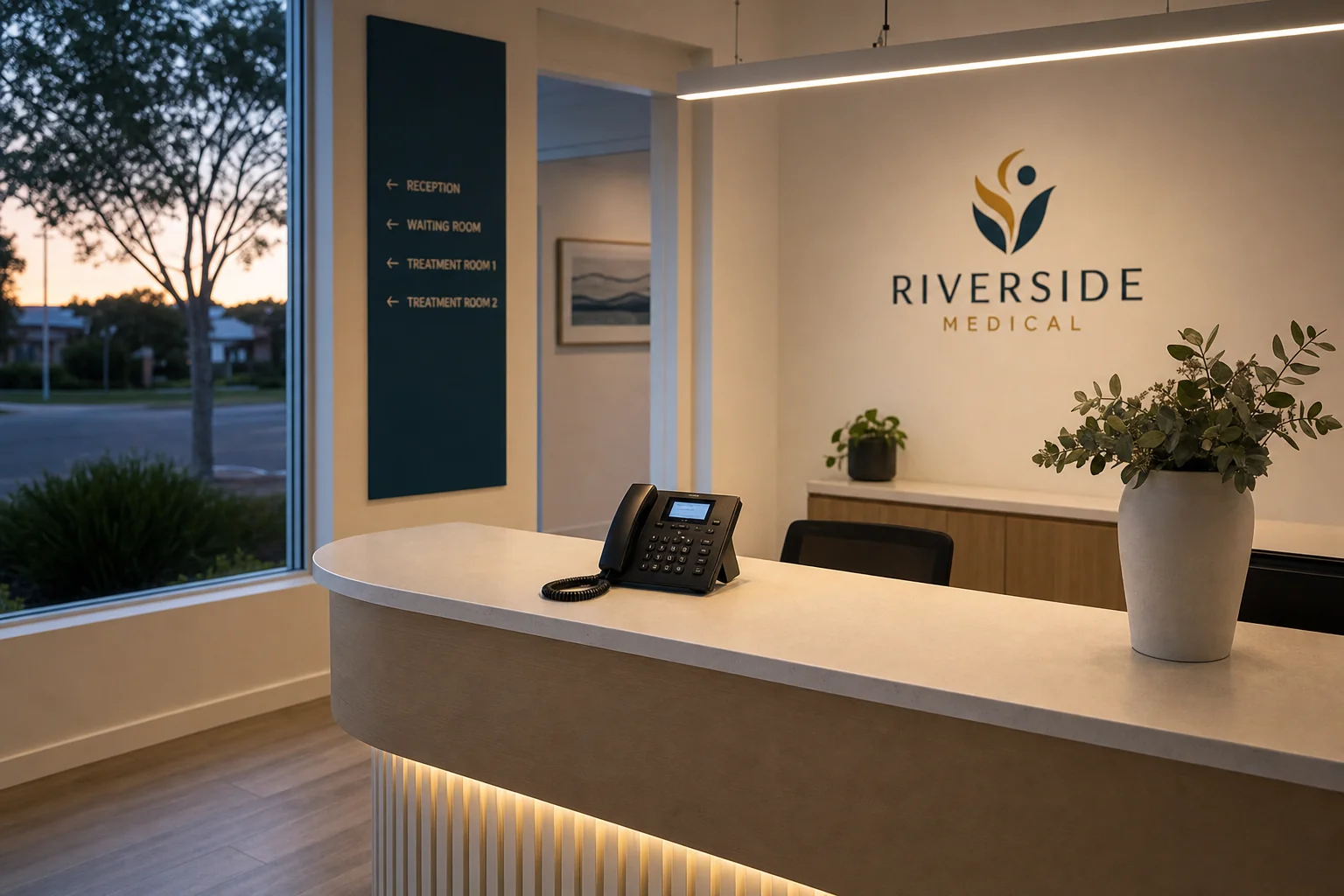
An NDIS call centre is a phone answering service that takes incoming calls for an NDIS provider or allied health practice: participant enquiries, referral calls from support coordinators and plan managers, appointment bookings, and general questions about services, when your own team can't pick up. Traditionally that means a team of human operators in a contact centre, charged per call or per minute, reading from a script you supply. In Australia, providers use a call centre because NDIS calls don't keep business hours. A participant rings about a cancelled shift on a Sunday, a support coordinator calls to refer someone on a Friday at 5pm, and a hospital discharge planner needs an answer before the bed is freed up. Every one of those calls that hits voicemail is a referral that goes to the next provider on the list. The modern alternative to a traditional NDIS call centre is an AI phone answering service: software with a natural voice that answers every call 24/7, takes the same details, books the same appointments, and sends you a written summary, on a flat monthly fee with no per-call charges. Here's how the two compare, and what to check before you switch.
What does an NDIS call centre do?
At its most basic, an NDIS call centre answers your phone in your business name when you're unavailable, takes a message, and emails or texts it to you. The better services do more than relay messages. For a busy provider, a call centre typically handles:
- Participant enquiries about appointments, shift times, cancellations, and what's covered under their plan
- Referral intake from support coordinators, plan managers, LACs, and hospital discharge teams
- Appointment booking and rescheduling directly into your calendar or practice software
- Overflow cover when your front desk line is already engaged
- After-hours and weekend answering so urgent calls reach a human voice or a clear next step
- Triaging urgent calls to the right person instead of letting them ring out
The model works, and it has for decades. The catch is the pricing structure and the staffing limits behind it, which is exactly where the AI alternative changes the maths.
AI vs a traditional NDIS call centre
The two services do a similar job. They answer differently, and they cost differently.
A traditional NDIS call centre is a team of human operators, often shared across many businesses, who pick up your diverted calls and follow a script. They charge per call or per minute, usually with a base monthly fee on top, and after-hours or booking handling often costs extra. A human voice handles nuance and distress well. The trade-offs are cost that scales with every call, hold times when operators are busy with other clients, and a script that only goes as deep as the brief you gave them.
An AI-powered phone answering service is software with a natural voice that answers your calls automatically. It picks up on the first or second ring, every time, with no hold queue. It holds a normal conversation, takes the caller's details, books the appointment, and sends you a transcript and summary the moment the call ends. Because it isn't a person being paid per call, it runs on a flat monthly fee with no per-call or per-minute charge, and it doesn't get busier or slower as your call volume grows.
The honest split: AI is excellent at the bulk of calls that are repetitive, booking changes, referral details, opening hours, what areas you service, and just as consistent at 3am as at 3pm. A traditional call centre's people still have the edge on the smaller share of calls that are emotionally charged or genuinely unusual, where a distressed participant needs a human within a couple of rings. The strongest setups use AI for the routine volume and route the hard calls to a person.
Why NDIS providers are switching to AI phone answering
Three things push providers away from the per-call model.
The maths. Call centres look reasonable until you do the annual sum. A provider taking a few hundred calls a month pays per call, plus a base fee, plus after-hours surcharges, plus a booking fee, and every new participant who rings costs a little more. A flat-fee AI service handles unlimited calls for the same monthly price whether you grow or not. Growth stops being a line item.
The missed-call problem. This is the real cost. According to 411 Locals (2023), 62% of calls to small businesses go unanswered, and 85% of callers who reach voicemail don't leave a message (PATLive). For an NDIS provider that's not a lost sales call, it's a participant who doesn't get supported and a referral that goes elsewhere. If you want to see what your own missed calls are likely costing, our missed-call calculator runs the numbers on a few inputs.
Availability. NDIS demand doesn't sit inside 9 to 5. A service that answers genuinely 24/7, including weekends and public holidays, without paying overtime or staffing a night desk, captures the calls a business-hours-only call centre sends to voicemail.
A quick honesty note: faster answering doesn't fix a slow business. If your intake process or follow-up is the bottleneck, picking up the phone sooner just surfaces that earlier. AI answering captures the call. What you do next still matters.
What about allied health and regulated calls?
Many NDIS providers are also allied health practices, physios, OTs, speech pathologists, psychologists, so the phone work overlaps with AHPRA-regulated territory. That's worth being precise about.
The answering work itself, taking a booking, confirming a referral, relaying a message, is operational rather than advertising, so most of what the service says to a caller is purely administrative. Where the script does describe your practice or services, it should be reviewed against AHPRA advertising guidelines before launch: no testimonials, no comparative claims, no claims about outcomes. The compliance obligation sits with your practice. A well-configured service is built to stay inside those lines, not to take on the regulatory responsibility, which remains yours.
On privacy, NDIS and health calls involve sensitive personal information, so handling matters. Ask for a written map of every provider that receives call audio, transcripts or messages, the storage location each provider confirms, who can access the data, how long it is retained and how it is deleted. The OAIC's guidance on APP 8 cross-border disclosure and APP 11 security and retention explains why the full data path matters. We've set out LUNA's approach on the AI receptionist data-handling page.
How LUNA Systems handles NDIS calls
LUNA Systems configures a virtual receptionist for NDIS providers and allied health around your service types, appointment rules, coverage areas and referral process. It answers on your existing number in full, overflow or after-hours mode, so it can support the front desk without replacing it wholesale.
For the allied health side, it works the same way as our medical virtual receptionist setups: scripts are reviewed against AHPRA advertising guidelines before launch, and the written scope identifies the approved data providers, confirmed storage regions, access roles, retention settings and deletion path. We do not describe a setup as Australian-hosted unless every relevant layer has been verified. LUNA is founded by a nurse, so the clinical-governance side is handled by people who have worked in healthcare and understand why a script can't drift into making claims it shouldn't.
Practically: setup runs two to four weeks, it works month to month with no lock-in, and there are no per-minute or per-call charges, a flat monthly fee instead. We don't publish a fixed price because no two providers run the same way. We quote it per business after a discovery call, once we understand your call volume, your service mix, and how you want the calls handled.
If you're weighing up a traditional NDIS call centre against an AI alternative, the question to settle first is whether you want a phone answered or the whole intake workflow handled. If it's the latter, get in touch for a custom quote, and we'll walk through what your calls would actually cost to cover.

Founder, LUNA Systems · Registered Nurse (AHPRA: NMW0002113429)
Former nurse and beauty therapist turned automation consultant. Justine builds custom AI systems for Australian service businesses, so they can stop chasing leads and start growing.
Want automation tips in your inbox?
Get weekly insights on business automation. No spam, unsubscribe anytime.