Accreditation does not have to be the dreaded fortnight it usually is. The panic comes from the same place every time: the clinic has been busy seeing patients, the paperwork has drifted, and now there is a surveyor booked and a scramble to get everything in order. The clinics that find it calm are not the ones with more time. They are the ones who kept things current all year, so the visit is a formality.
This is a plain-English guide to what an accreditation surveyor looks for and how to be ready ahead of time. It is general information, not accreditation advice. Your accrediting body's standards are the source of truth, and your practitioners own the clinical content.
What a surveyor is really checking
Underneath every standard, a surveyor is testing one thing: does the clinic actually do what it says it does, consistently, and can it show it? They are not trying to catch you out. They are looking for evidence that the practice is safe, well run, and the same on a quiet Tuesday as on a busy one.
That means three things matter more than anything else: your documents are current and match reality, your systems run consistently whoever is on shift, and you can demonstrate both. A clinic that has all three has very little to fear from a visit.
The areas that come up every time
- Your policy and procedure manual, current, version-dated, and matching how the clinic actually works.
- Patient records and privacy, secure handling in line with the Privacy Act, with consent properly documented.
- Infection prevention and control, from hand hygiene to sterilisation to managing exposures, with the signage to match.
- Clinical governance, how you record and review incidents and near-misses, and show you learn from them.
- Staff credentialing and training, registration checks, induction, and ongoing training records.
- Emergency and risk management, what staff do in an emergency, and evidence it has been practised.
- Consent, current, procedure-specific forms that record an actual informed-consent process.
If those are in order, you are most of the way there.
How to be ready all year (not in the last fortnight)
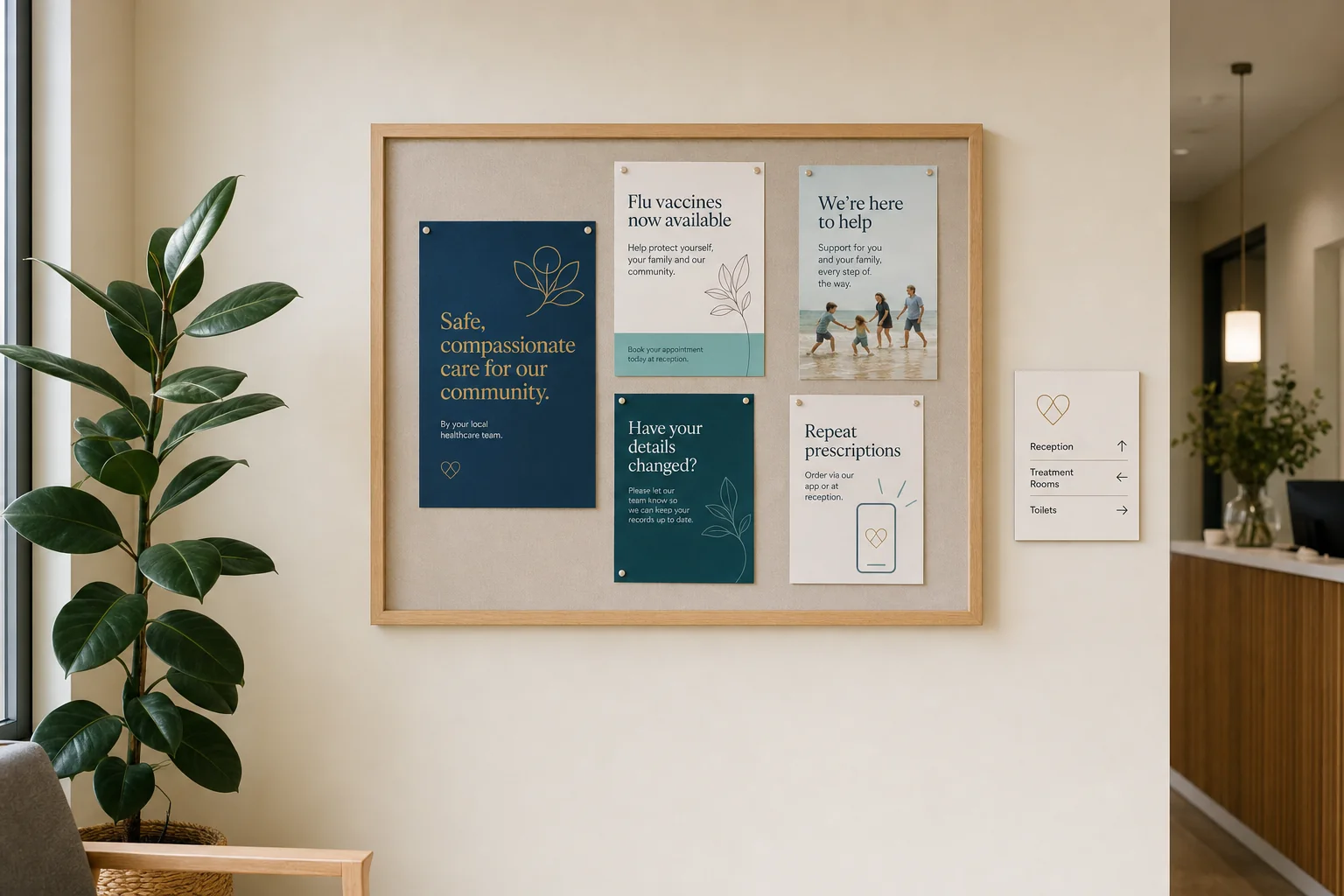
- Keep one current source of truth. A manual, consent forms, and signage that are reviewed on a cycle and version-dated never need a panic rewrite, because they never go far out of date.
- Run an internal check between audits. Walk your own clinic against the standard once or twice a year. Finding a gap yourself in March is a quiet fix; finding it during the actual audit is a finding.
- Keep your evidence findable. Surveyors ask to see things. Training records, incident reviews, cleaning logs, and version-dated policies should be where you can put your hand on them.
- Match the floor to the file. The most common finding is a procedure that no longer matches how the clinic works. When a process changes, update the document the same day.
- Do not leave the boring bits. Fees signage, privacy notices, complaints processes, the unglamorous items are exactly what gets checked and exactly what gets forgotten.
A countdown that keeps the visit calm
Even for a well-run clinic, it helps to have a shape to the run-up. This is a simple countdown you can adapt to your own standard and visit date. The earlier work is deliberately light, because if you have kept things current all year, there is not much to do.
Six months out. Confirm the visit window and which version of the standard applies. Do a full internal walk-through against it and write down anything that does not match, from a policy that has drifted to a room missing a sign. This is the moment to find gaps, while there is time to fix them properly rather than paper over them.
Three months out. Work through the gaps from the walk-through. Update the manual and any procedures that have changed, and make sure staff are actually working to the new version, not just that the document has been edited. Check registration and credentialing records are current for every practitioner, and that induction and training records have no holes.
One month out. Do a second, lighter walk-through to confirm the fixes have held. Refresh signage room by room. Make sure your evidence is where you can put your hand on it: version-dated policies, training records, incident and near-miss reviews, cleaning and sterilisation logs. Brief the team on what to expect, so no one is caught off guard on the day.
The week before. No big changes now, changing a process days before a visit creates exactly the file-versus-floor gap you are trying to avoid. Walk the clinic one last time, confirm nothing obvious is missing, and make sure whoever is hosting the surveyor knows where everything lives.
On the day. Let the practice speak for itself. If the documents are current, the systems are consistent, and the evidence is to hand, the visit is confirmation, not examination.
What a surveyor will ask to see
"Keep your evidence findable" is easy to say and vague to act on, so it helps to know the kinds of things you may be asked to produce. None of this is exotic; the difficulty is almost always locating it quickly, not having it at all:
- A version-dated policy or procedure for a process the surveyor names, and evidence the current version is the one in use.
- Training and induction records showing staff have been trained on the processes that matter, with dates.
- Registration and credentialing checks for practitioners, current and on file.
- An incident or near-miss review, showing not just that something was recorded but that it was reviewed and something changed as a result.
- Cleaning, sterilisation, and maintenance logs where your standard expects them, filled in consistently rather than in a rush.
- Consent records that show an actual informed-consent process, on current procedure-specific forms.
If you can produce each of these within a minute or two, your evidence is genuinely findable. If any of them triggers a hunt through email or a filing cabinet, that is the thing to fix before the visit, not during it.
The mindset that makes it calm
Stop treating accreditation as an event and start treating it as the natural result of running a tidy practice. If the documents are current, the systems are consistent, and the evidence is to hand on any given day, the audit is just someone confirming what is already true. The fire drill only happens when preparation is left until the smoke alarm goes off.
Where LUNA fits
This is the thread running through all of our practice compliance work for healthcare clinics and practices. We review and rebuild your practice manual, your patient documents, and your clinic signage so they are current and consistent, and through Compliance Care we keep them refreshed and monitor your audit calendar so nothing lapses between visits. If your website is in scope for the audit too, our free website compliance check scans your live clinic site against the AHPRA advertising rules and flags what to fix first. The goal is exactly the calm version above: ready all year, not scrambling in the last fortnight.
To be straight about what that means: we audit, recommend, normalise, and maintain your documents, and your practitioner reviews and signs off the clinical accuracy. We can give you the best-organised, most current paperwork you have had, which is what preparation looks like. We are careful never to promise the outcome itself, because a regulatory result depends on the whole practice, not the documents alone. What we can honestly say is that walking into an audit with current, consistent, findable evidence is a far better place to be than the usual last-minute scramble, and getting there is mostly a matter of starting before the visit is booked.

Founder, LUNA Systems · Registered Nurse (AHPRA: NMW0002113429)
Former nurse and beauty therapist turned automation consultant. Justine builds custom AI systems for Australian service businesses, so they can stop chasing leads and start growing.
Want automation tips in your inbox?
Get weekly insights on business automation. No spam, unsubscribe anytime.