The difference between a top-performing real estate agent and an average one rarely comes down to sales ability. It comes down to speed and consistency. A Harvard Business Review study of 1.25 million sales leads at 42 US companies found that firms contacting a lead within an hour were nearly seven times as likely to qualify it as firms that tried even an hour later (HBR, "The Short Life of Online Sales Leads", 2011). In Australian real estate, where agents juggle listings, inspections, vendor calls, and administration simultaneously, the agents who automate their follow-up and communication are the ones who consistently outperform. Workflow automation and CRM setup are no longer competitive advantages, they are baseline requirements for agents who want to keep up.
The lead follow-up problem in real estate
Every real estate agent knows they should follow up faster. The problem is not awareness, it is capacity.
A typical day for an Australian agent might include three property inspections, two vendor meetings, a listing presentation, and a stack of admin. Between all of that, leads are coming in from realestate.com.au, Domain, your website, social media, and direct calls. Each one needs a response.
Here is what usually happens:
- A buyer enquiry comes in at 10:15am while you are mid-inspection. You see the notification at 11:30am. By then, they have already spoken to another agent.
- An appraisal request lands on your website at 8pm on a Thursday. You do not see it until Friday morning. The homeowner submitted the same request to two other agencies, and one of them had an automated response that went out within 60 seconds.
- You meet 15 groups at an open home on Saturday. You plan to follow up on Monday. By Monday afternoon, you have called four of them and the rest never hear from you.
It is easy to chase a lead once and then move on, yet a single lost listing can cost you a full commission.
How lead follow-up automation works
Lead follow-up automation ensures every enquiry gets an immediate, personalised response and a structured follow-up sequence, regardless of whether you are available to respond personally.
Here is what an automated lead follow-up looks like for a real estate agent:
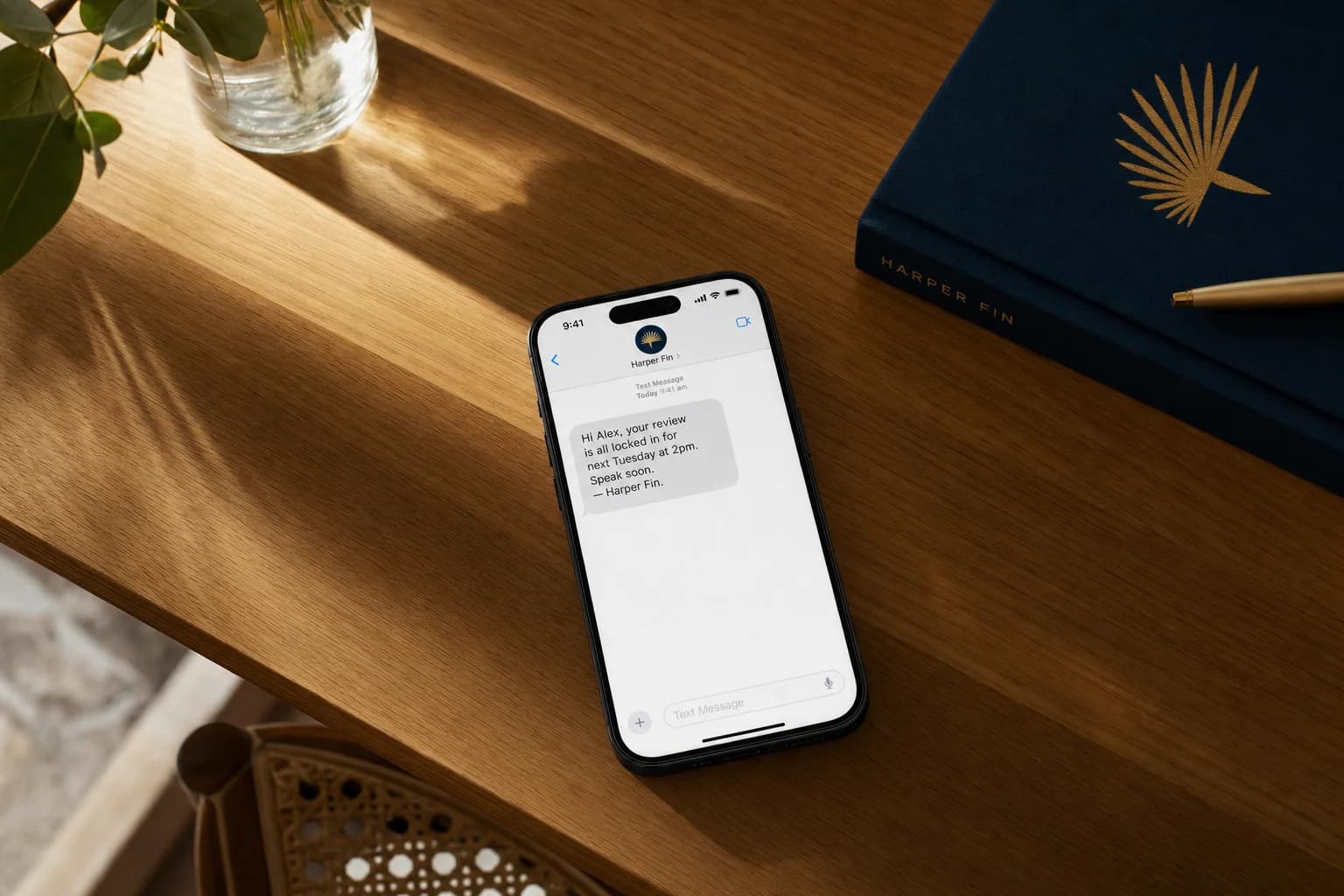
Instant acknowledgement (0-60 seconds): When a lead submits an enquiry through any channel, your website, a portal listing, a social media ad, or a landing page, they receive an immediate SMS and email. The message acknowledges their enquiry, confirms the property or service they asked about, and tells them what to expect next.
Personalised follow-up (1-2 hours): A second message provides additional value, a link to similar properties, a suburb market report, or an invitation to book a call. This is still automated but feels personal because it is tailored to the enquiry type.
Agent notification: Simultaneously, you receive a notification with the lead's details, enquiry type, and a priority score based on the information they provided. Hot leads (ready to buy, pre-approved, specific property enquiry) are flagged for immediate personal follow-up.
Nurture sequence (days 2-14): If the lead does not convert immediately, they enter an automated nurture sequence, a series of three to five messages spaced over two weeks, each providing value (market updates, new listings, suburb insights) and including a clear call to action.
This entire sequence runs in the background through your CRM, so no lead falls through the cracks regardless of how busy your day gets.
Automating appraisal request capture
Appraisal requests are the highest-value leads in real estate. A homeowner requesting a property appraisal is signalling intent to sell. The speed and quality of your response directly determines whether you win or lose that listing.
Automation handles this in several ways:
Landing page with instant response: Your website or advertising drives homeowners to an appraisal request form. When they submit, they receive an immediate confirmation with a preliminary market snapshot for their suburb, median price, days on market, recent sales. This positions you as knowledgeable and responsive before you have even spoken to them.
Automated CRM entry: The lead enters your CRM with all the information they provided, address, property type, timeline, reason for selling. You do not need to manually enter anything.
Follow-up sequence: If you cannot call within the hour, an automated sequence keeps the homeowner engaged, a "what to expect from your appraisal" email, a link to your recent sales in their area, and a booking link for a time that suits them.
Agent alert: You get an immediate push notification with all the details so you can prioritise a personal call when you are free.
The agents who automate appraisal capture consistently win more listings because they respond faster and more professionally than agents who rely on checking their inbox between inspections.
Open home follow-up automation
Open homes generate a concentration of leads in a short window. You meet 10-30 groups in 30 minutes, collect their details, and then face the challenge of following up with every single one while also managing the rest of your workload.
Here is how automation transforms open home follow-up:
Digital sign-in: Replace the paper sign-in sheet with a digital form (tablet or QR code). Attendees enter their name, email, phone number, and buying stage. This data goes directly into your CRM, no manual data entry, no illegible handwriting.
Immediate follow-up (within one hour): Every attendee receives a personalised message thanking them for attending, with a link to the property details, floor plan, and a prompt to register interest or book a private inspection.
Segmented sequences: Based on the buying stage they indicated at sign-in, attendees enter different follow-up sequences. Serious buyers get a call from you within 24 hours. Early-stage researchers get a nurture sequence with market updates. Neighbours who came for a look get added to your prospecting database for future appraisals.
Vendor reporting: The number of attendees, their feedback, and their buying stage is compiled into an automated vendor report, more on that below.
Without automation, agents typically follow up with fewer than half of open home attendees. With automation, every single person who walks through the door hears from you within the hour.
Vendor reporting automation
Keeping vendors informed is one of the most time-consuming parts of campaign management. Vendors want to know how many enquiries their property received, how many people came to the open home, what feedback was, and what the next steps are.
Automated vendor reports pull this data from your CRM and compile it into a professional weekly report:
- Enquiry numbers, how many buyer enquiries were received that week
- Open home attendance, number of groups, buying stages, and key feedback
- Online performance, views and saves on realestate.com.au and Domain
- Campaign summary, what has been done, what is coming next
- Market context, recent comparable sales, days on market trends
These reports can be generated and sent automatically every Monday morning, giving your vendors consistent updates without you spending 30-60 minutes per listing writing them manually. Agents managing five or more concurrent listings save several hours per week.
Review collection for real estate agents
Online reviews influence how potential sellers and buyers perceive your credibility. A strong Google review profile is particularly valuable for winning appraisal requests, homeowners research agents before choosing who to invite.
Automated review collection works the same way it does in other industries:
After a successful settlement, your system sends the client a personalised message asking for a Google review. The message goes out at the optimal time, typically one to two days after settlement, when the client is still feeling the positive emotions of the transaction.
Every client gets the same request. A private feedback form can sit alongside it as an extra way to raise a concern, but never as a filter that keeps unhappy clients away from Google. That is review gating, and Google prohibits it.
Agents who automate review collection consistently build stronger online profiles than those who rely on asking in person or not asking at all.
What tools do you need?
The technology stack for a well-automated real estate business typically includes:
- A CRM with automation capability, This is the foundation. Your CRM should handle contact management, pipeline tracking, and automated communication sequences. Options range from real estate-specific platforms to general CRMs configured for property.
- Workflow automation, Connects your CRM to your other tools (email, SMS, portals, calendar) so data flows automatically between them.
- AI phone answering, Captures calls you cannot answer, qualifies the enquiry, and logs it in your CRM. Particularly valuable for after-hours buyer and appraisal enquiries.
- A website that converts, Your real estate website should have appraisal request forms, property search, and clear calls to action that feed leads directly into your CRM.
The cost of setting up this stack varies with the tools you choose and how much is done for you, so get it quoted before you commit. Given that a single lost listing can cost you a full commission, the return on investment can be significant.
Frequently asked questions
Will automation make my communication feel impersonal?
No, when set up correctly, automated messages are personalised with the recipient's name, property details, and relevant context. The goal is not to replace personal communication but to ensure immediate, consistent first responses while you focus your personal time on high-value conversations. Most clients cannot tell the difference between a well-crafted automated message and a manually sent one.
Can I automate follow-up from realestate.com.au and Domain leads?
Yes. Most CRM and automation platforms can receive leads from portal enquiries via email parsing or direct integration. When a buyer enquires on your listing through realestate.com.au, the lead enters your CRM and triggers your follow-up sequence automatically.
How long does it take to set up automation for a real estate business?
A basic lead follow-up and open home sequence can be operational within one to two weeks. A full setup including appraisal capture, vendor reporting, review collection, and AI phone answering typically takes three to four weeks. The key is getting the CRM foundation right first, everything else builds on top of it.
What if I already use a real estate CRM?
Most existing CRMs can be enhanced with additional automation. If your current CRM has limited automation features, a workflow automation layer can extend its capability without requiring you to switch platforms. We assess your existing tools before recommending changes.
Is this only for large agencies or can solo agents benefit?
Solo agents often benefit the most. When you are the only person in the business, every task that can be automated frees up your time for dollar-productive activities, listing presentations, buyer negotiations, and relationship building. Automation gives solo agents the responsiveness and consistency of a team without the overhead.
---
The agents closing the most deals in Australia are not necessarily working more hours. They are ensuring that no lead goes cold, no follow-up is forgotten, and no vendor feels uninformed, because their systems handle it automatically.
Ready to automate your real estate business? Contact LUNA Systems and we will build a system around your workflow, from CRM setup and lead follow-up to vendor reporting and review collection. We work with agents and agencies across Australia, from independents to franchise groups.

Founder, LUNA Systems · Registered Nurse (AHPRA: NMW0002113429)
Former nurse and beauty therapist turned automation consultant. Justine builds custom AI systems for Australian service businesses, so they can stop chasing leads and start growing.
Want automation tips in your inbox?
Get weekly insights on business automation. No spam, unsubscribe anytime.