Most Australian service businesses are bleeding $4,000 to $12,000 per month in revenue they never see, not because they are bad at what they do, but because manual processes silently leak money in places they have never thought to look. The five most common signs are: missing calls during jobs or after hours (costing $2,000-$5,000/month in lost leads), forgetting to follow up with enquiries (costing $1,500-$4,000/month in deals that go cold), appointment no-shows eating into revenue ($800-$2,400/month in wasted time slots), having fewer than 20 Google reviews (costing $1,000-$3,000/month in leads that choose a better-reviewed competitor), and spending 10 or more hours per week on admin instead of billable work ($1,200-$3,000/month in lost productivity). The good news: every one of these problems has a proven business automation solution that pays for itself within weeks.
Are you missing calls during jobs or after hours?
This is the most expensive invisible problem in Australian service businesses. You are on the tools, mid-consultation, or driving between jobs. The phone rings. You cannot answer. The caller, a new lead who found you on Google, hangs up and calls the next result.
The hidden cost: The average Australian service business misses 5 to 10 calls per week. At a typical job value of $300 to $600, even converting a third of those missed calls would add $500 to $2,000 per week to your revenue. Over a month, that is $2,000 to $5,000 you never knew you lost. And the caller who did not get through? They did not leave a voicemail. 411 Locals research shows 85% of callers who reach voicemail simply hang up and try someone else.
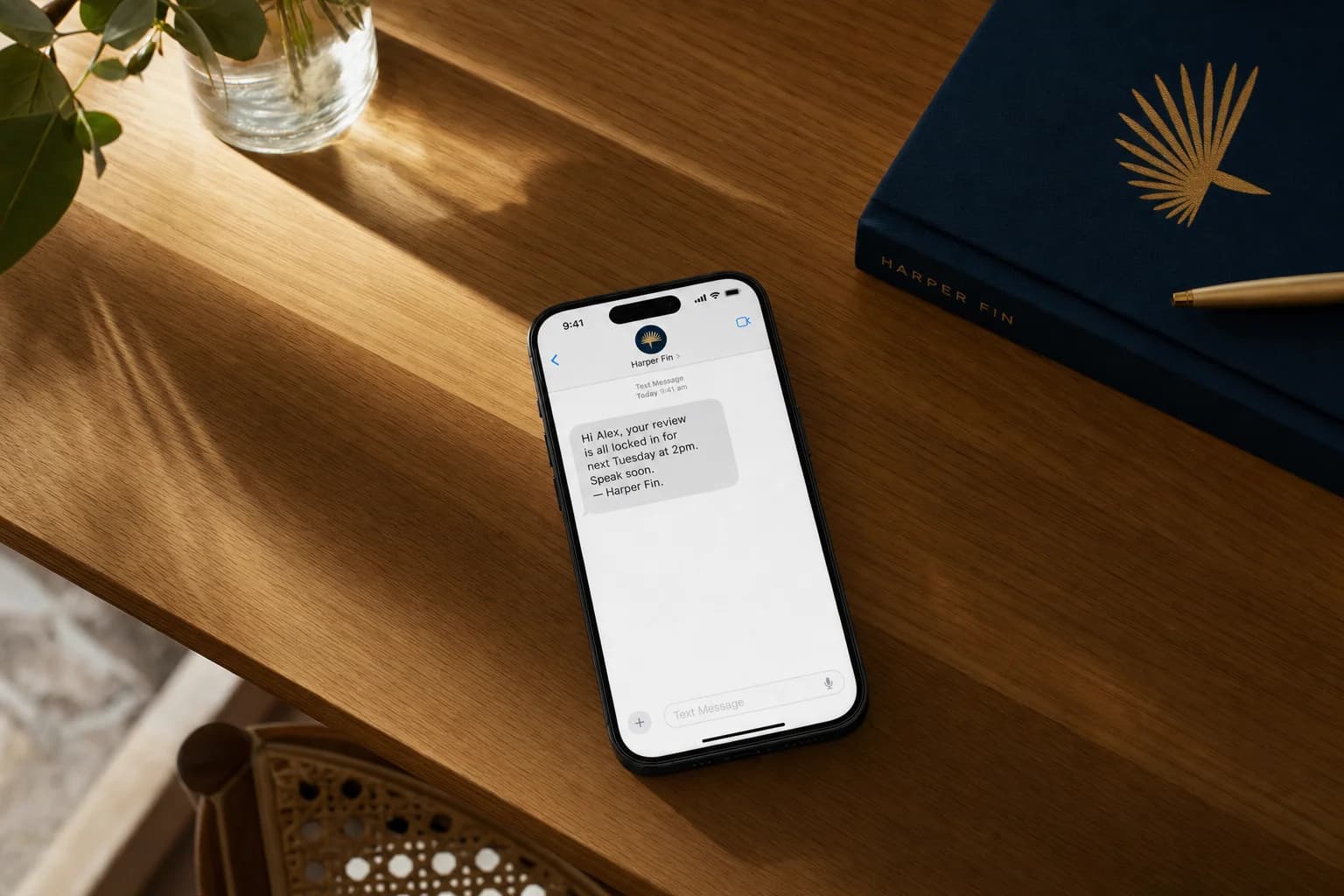
The automation fix: A missed call text back system detects every unanswered call and sends a personalised SMS to the caller within 30 seconds. The message acknowledges the missed call and gives the caller a way to book, reply, or leave details, keeping the lead warm until you are free to respond. Better still, an AI receptionist actually answers the call in the first place, 24/7, so the lead never has to be won back at all.
Expected result: Businesses using missed call text back typically recover 30 to 50% of calls that would have been permanently lost. For a tradie missing 8 calls per week, that is an extra 2 to 4 jobs per week, worth $600 to $2,400 in recovered revenue.
Are leads going cold because you forget to follow up?
You spoke to someone on Monday. They said they would think about it. You meant to call them back on Wednesday. By Thursday you have forgotten, and by the following week they have booked with someone else. This is not a character flaw, it is a systems problem.
The hidden cost: Research from the National Sales Executive Association shows that 80% of deals require five or more touchpoints, yet most small business owners stop at one. If you quote 10 jobs per week and lose 3 simply because you did not follow up, at an average job value of $500, that is $1,500 per week or $6,000 per month walking out the door. Even conservatively, losing 1 to 2 jobs per week to poor follow-up, you are looking at $1,500 to $4,000 per month.
The automation fix: A CRM setup with automated follow-up sequences sends a text or email to the lead at set intervals after the initial enquiry, 1 hour, 24 hours, 3 days, 7 days. The messages are personalised and timed so they feel human, not robotic. The system also flags leads that respond so you know exactly who to prioritise.
Expected result: Automated follow-up sequences typically lift conversion rates by 15 to 30%. On a pipeline of 40 leads per month, that is 6 to 12 additional jobs closed, often without you doing anything extra.
Are no-shows eating into your revenue?
A client books a 2pm appointment. You block out the time, turn away other work, and show up ready to go. They do not. No call, no text, just a gap in your day that earns you nothing. For clinics, salons, and consultants charging by the hour, no-shows are one of the most frustrating revenue killers, and one of the easiest to fix.
The hidden cost: The average no-show rate for Australian service businesses without reminders sits between 10% and 20%. If you run 80 appointments per month at $150 each, a 15% no-show rate means 12 missed appointments, that is $1,800 per month in revenue that vanishes. For higher-ticket services like dental or cosmetic consultations at $300 to $500 each, the monthly cost of no-shows can exceed $2,400.
The automation fix: Booking automation sends a confirmation immediately after booking, a reminder 24 hours before, and a final reminder 2 hours before the appointment. Each message includes a one-tap option to confirm, reschedule, or cancel. Cancellations free up the slot for someone else. The system handles all of this without your staff touching a thing.
Expected result: Automated appointment reminders reduce no-shows by 40 to 60%. That 15% no-show rate drops to 6 to 9%, recovering $720 to $1,080 per month on an 80-appointment schedule, and reclaiming time slots you can fill with paying clients.
Do you have fewer than 20 Google reviews?
Here is an uncomfortable truth: you could be the best in your area, but if your Google Business Profile has 12 reviews and your competitor has 87, the competitor gets the call. Reviews are the new word-of-mouth, and most service businesses are terrible at collecting them, not because clients would not leave one, but because nobody asks at the right time in the right way.
The hidden cost: A BrightLocal survey found that 87% of consumers read online reviews for local businesses, and 73% only pay attention to reviews written in the last month. If your low review count or stale profile causes even 5 potential customers per month to choose a competitor instead, at an average job value of $400, that is $2,000 per month in revenue quietly going elsewhere. For businesses in competitive markets, think plumbers in Sydney, dentists in Melbourne, salons in Brisbane, the cost can climb to $3,000 or more.
The automation fix: Review automation sends a personalised review request via SMS after every completed job or appointment. The timing is key, the message goes out while the experience is still fresh, usually within 1 to 2 hours. It includes a direct link to your Google review page, making it a two-tap process for the customer.
Expected result: Businesses using automated review requests typically collect 10 to 30 new Google reviews per month compared to 1 to 3 without. Within 60 to 90 days, most businesses move from under 20 reviews to 50 or more, enough to shift their Google ranking and win significantly more clicks.
Are you spending 10+ hours a week on admin instead of billable work?
You became a plumber to fix pipes, not to spend Sunday night typing up invoices. You opened a clinic to help patients, not to manually copy appointment details between spreadsheets. Yet the average Australian small business owner spends 10 to 15 hours per week on administrative tasks: scheduling, data entry, sending reminders, chasing payments, updating spreadsheets, and responding to routine enquiries.
The hidden cost: If your billable rate is $120 per hour and you are spending 10 hours per week on admin, that is $1,200 per week, or $4,800 per month, in time that could have been spent earning revenue. Even at a more modest rate of $80 per hour, that is still $3,200 per month in lost productive capacity. The real cost is often higher because admin done manually is also slower, more error-prone, and more mentally draining than the same work done by automation.
The automation fix: A combination of CRM setup and booking automation handles the bulk of routine admin: automatic appointment scheduling, confirmation and reminder sequences, lead capture and follow-up, review requests, and basic reporting. The goal is not to eliminate all admin, it is to eliminate the repetitive, forgettable tasks that steal hours from your week.
Expected result: Most businesses reclaim 6 to 10 hours per week after implementing automation, time that goes back into billable work, business development, or simply finishing at a reasonable hour. At $100 per hour, recovering 8 hours per week is worth $3,200 per month.
Summary: What these inefficiencies cost and how to fix them
| Sign | Monthly Cost (AUD) | Automation Solution | Expected Monthly Saving (AUD) |
|---|---|---|---|
| Missing calls during jobs/after hours | $2,000-$5,000 | Missed call text back | $600-$2,400 |
| Leads going cold from no follow-up | $1,500-$4,000 | CRM with automated follow-up | $1,000-$3,000 |
| Appointment no-shows | $800-$2,400 | Booking automation with reminders | $720-$1,080 |
| Fewer than 20 Google reviews | $1,000-$3,000 | Automated review requests | $800-$2,000 |
| 10+ hours/week on admin | $1,200-$3,000 | CRM + booking automation | $1,200-$3,200 |
| Total | $6,500-$17,400 | $4,320-$11,680 |
How to calculate what inefficiency is costing YOUR business
You do not need a consultant to figure this out. Grab a calculator (or use our missed call revenue calculator) and work through these three steps:
Step 1: Count your leaks. For one week, track these five numbers: missed calls, leads you did not follow up, no-shows, review requests sent (probably zero), and hours spent on admin. Write them down, do not guess.
Step 2: Attach a dollar figure. Multiply your missed calls by your average job value and a 30% conversion rate. Multiply no-shows by your average appointment value. Multiply admin hours by your hourly rate. Add it all up. This is your weekly leakage.
Step 3: Multiply by four. That is your monthly cost of inefficiency. For most service businesses, the number lands between $4,000 and $12,000. For some, it is significantly higher.
If the number surprises you, and it usually does, the next step is not to panic. It is to prioritise. Pick the one or two leaks that are costing you the most and automate those first. You will see the return almost immediately.
Want help running the numbers for your specific business? Book a free discovery call and we will walk through it together.
What I see most often as the silent killer
Of the five problems in this article, the one I see costing owners the most, and the one almost none of them flag as the biggest issue when we first speak, is lead follow-up. Owners obsess about missed calls (visible, the phone rings, they don't pick up). They almost never count the leads they already spoke to that just went cold. The pattern is always the same: a busy Tuesday quote-up, a "send me a quote" that gets sent that night, no reply, and no second touch because the owner was on the tools the next morning. Two weeks later the lead has booked the competitor who texted them back the next day. Whenever I run the numbers with a new client, follow-up gaps are usually the single biggest line item on the leakage spreadsheet, and the easiest one to fix in week one with a basic SMS sequence. If you only automate one thing, automate this.
Frequently asked questions
How quickly does automation start paying for itself?
Most businesses see measurable results within the first 2 to 4 weeks. Missed call text back starts recovering leads from day one. Review automation builds momentum over 30 to 60 days. The full suite of automations typically pays for itself 3 to 5 times over within the first month. Get a custom quote for a breakdown of costs.
Do I need to be tech-savvy to use business automation?
Not at all. LUNA Systems is a done-for-you service, we build, configure, and test everything for you. You do not need to learn new software or change how you work. The automations run in the background, and you interact with them through your phone the same way you would with normal texts and notifications.
Will automated messages feel impersonal to my customers?
The opposite, actually. Automated messages are personalised with the customer's name, your business name, and context about their enquiry or appointment. Because they arrive promptly, within seconds of a missed call or hours after an appointment, they feel more attentive than a manual response that comes a day late.
What if I only need help with one or two of these problems?
That is completely fine. Most businesses start with the one or two automations that will make the biggest difference, usually missed call text back and review automation, and add more over time. There is no lock-in and no pressure to buy a full package.
---
Every month you wait, these inefficiencies keep quietly draining revenue from your business. The fixes are not complicated, they are not expensive, and they start working almost immediately.
Book a free discovery call and find out exactly how much your business could recover with the right automations in place.

Founder, LUNA Systems · Registered Nurse (AHPRA: NMW0002113429)
Former nurse and beauty therapist turned automation consultant. Justine builds custom AI systems for Australian service businesses, so they can stop chasing leads and start growing.
Want automation tips in your inbox?
Get weekly insights on business automation. No spam, unsubscribe anytime.